Shamelessly repurposing

0
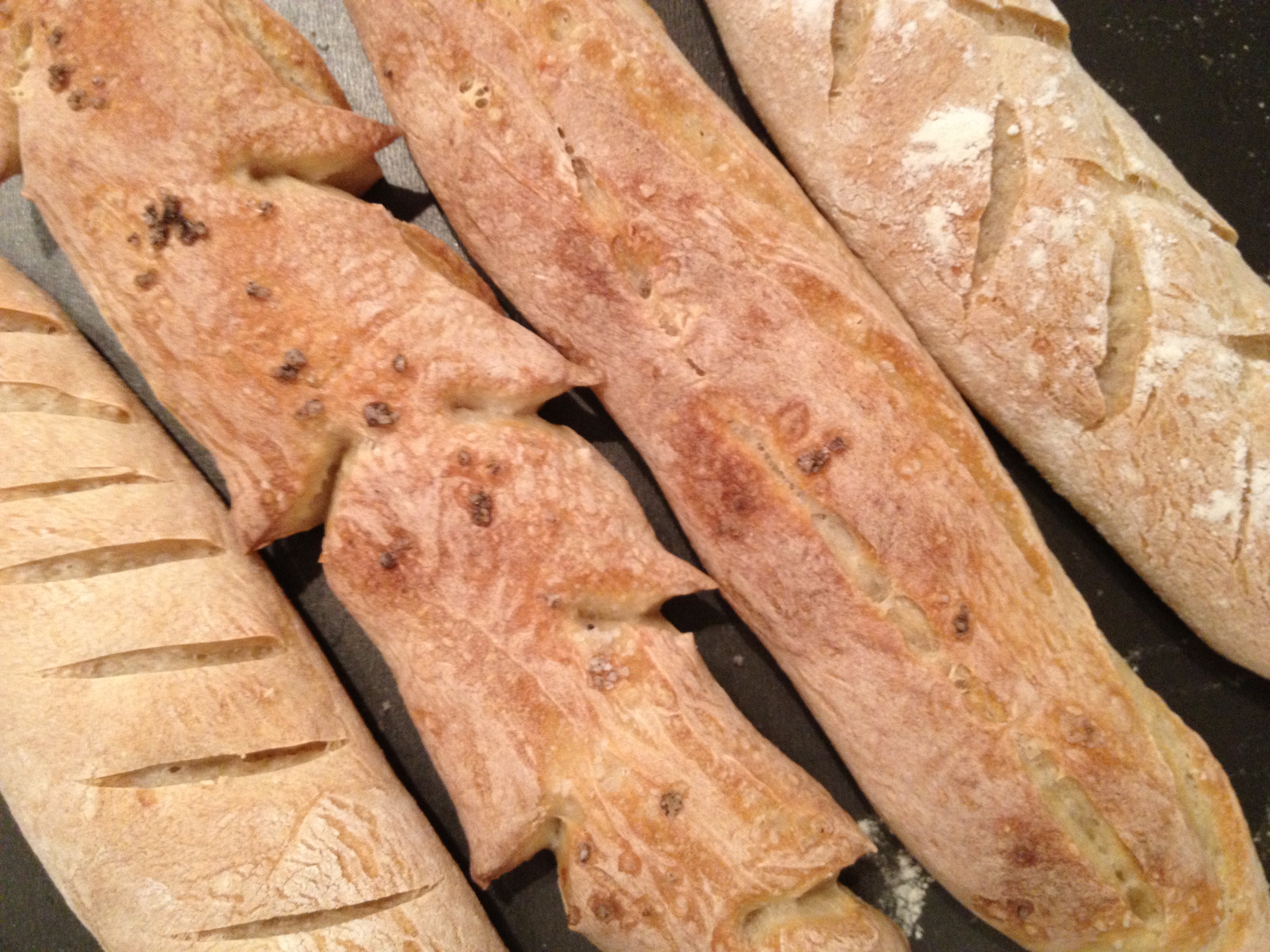
Baguettes I baked in Paris, January 2013

Baguettes I baked in Paris, January 2013

Because I just turned in a 1350-word piece today on Chef Herb Wilson of SushiSamba restaurant in Las Vegas for Style magazine, I’m not feeling especially loquacious this evening, but from what I understand, blogging is like exercise, and once you make some lame excuse to avoid it, it’s all downhill. Accordingly, I’ll point you instead to a fairly long piece I wrote a while ago for the LA Review of Books called “Around the Table,” in which I manifestly did not review a trio of praiseworthy books: The Table Comes First: Family, France, and the Meaning of Food, by Adam Gopnik; Dinner Chez Moi: The Fine Art of Feeding Friends, by Laura Calder; and In The Small Kitchen: 100 Recipes from Our Year of Cooking in the Real World, by Cara Eisenpress and Phoebe Lapine.

Adam Gopnik

Adam Gopnik

Adam Gopnik and I grew up in Philly around the same time, and for some reason that I can’t fathom (unless it’s some combination of talent, luck, drive, and the fact that I spent much of my adult life in what used to be known as the record industry), he has become a fairly famous regular contributor to the New Yorker, while I am writing a after-dinner blog post in my breakfast nook. Like me, he has an abiding love of France — you almost can’t dislike it if you ever visit, and all the advance PR about Parisians being snotty has been, in my experience, just plain untrue.

Laura Calder

Laura Calder

I’d probably be smitten with Laura Calder even if she weren’t such an engaging TV host, cook, and native of New Brunswick, Canada, where I also was born. Her program, irregularly scheduled on the Cooking Channel, is called French Food at Home, and it’s a breezy, fun, entertaining, and informative half hour, fifty of which have made a more or less permanent home on my DVR. This most recent book (Dinner Chez Moi) had been scheduled for an American release last year, and while that somehow that never seemed to happen, it’s readily available on the Amazon.ca site. Her casual style belies the rigorous training she received, not only in a variety of kitchens in France, but also in the Canadian Army (though her food is anything but institutional).

Cara Eisenpress and Phoebe Lapine

Cara Eisenpress and Phoebe Lapine

And finally, Cara Eisenpress and Phoebe Lapine are a pair of “quarter-life” bloggers who turned their website into an Internet sensation and a book. They have an uncommon common touch when it comes to cooking with limited resources (both in terms of space and capital), and their book contains just possibly the Best. Lentil. Recipe. Ever. I wish I’d had their insight — and focus — at their age. Actually, I’d be pretty pleased to have it even now. This is a must-have book for anyone graduating to their first apartment, and who aspire (or ought to aspire) to something more than a life of take-out. It’s practical and fun and full of great ideas for the kitchen and the informal salon that so many of us home cooks wind up hosting.

Howard Johnson's Plate

Howard Johnson’s Plate

Full disclosure: Not long after my piece appeared in the LA Review of Books, I had the opportunity to meet Adam Gopnik, and because both he and I waxed rhapsodically about the joys of Howard Johnson’s in our respective works, I picked up a pair of vintage plates from HoJo’s on eBay and gave him one. The other is in my kitchen, a reminder of two ten-year-olds who grew, each quite happily, in very different directions, but for whom the phrase “28 Flavors” will always evoke a potent memory.

In Praise of a Very Fancy Blender

3

100_3529a

First off, let me say from the outset that I’m not a “juice guy.” Sure, I’ve seen the infomercials and heard the testimonials and been subject to in-store demos, just like the rest of us. And I love juice; very few liquids on Earth bring me greater pleasure than a fresh-squeezed glass of blood orange juice. But I’m not persuaded that juice can rightly claim the curative powers that its disciples ascribe to it. So it wasn’t for that reason that I found myself on Craigslist, obsessing over finding my first VitaMix (or Vita-Mixer, as it was known then).

Last year, I had promised to make mushroom soup for a Thanksgiving gathering at our friends Rick and Lori’s house, and I knew that some of the attendees had dairy issues. Accordingly, I mused aloud on my FB page as to whether I should substitute almond milk, or cashew cream, or some sort of ersatz non-dairy sour cream substitute as a thickening agent, to give it a “creaminess” without using cream. My pal (and head chef at Papilles Bistro in Hollywood) Tim Carey commented, “I never use cream. Get yourself a VitaMix.” Okay. When you get advice from the guy who has made the best cauliflower soup you’ve ever had in your life, it makes sense to listen.

VitaMix products are expensive. No, really. They are. Very. Expensive. Then again, so are Maybachs, and for much the same reason. I’m pretty sure I could throw a handful of gravel in my Vita-Mixer and come out with a lovely powder, suitable for sprinkling over a fruit cocktail that found itself light in mineral content. The one that I bought — a Vita-Mixer 4000, used, for $200 — had been in service for over a decade and a half, and the guy who sold it did so only because he had been given a new one as a present. It’s a champ, the very one pictured at the top of this post. Easy to clean, easy to use (though I have twice made a pretty comical mess of the kitchen by failing to secure the so-called “Action Dome”). The original cookbook, which came as part of the purchase, claims that one can actually use the device to cook soup, due to the friction of its rotors against the canister’s contents. That may be so, but the idea of having to listen to this device at full throttle for half an hour is about as appealing as being subjected to an extra-innings Justin Bieber concert.

100_3521

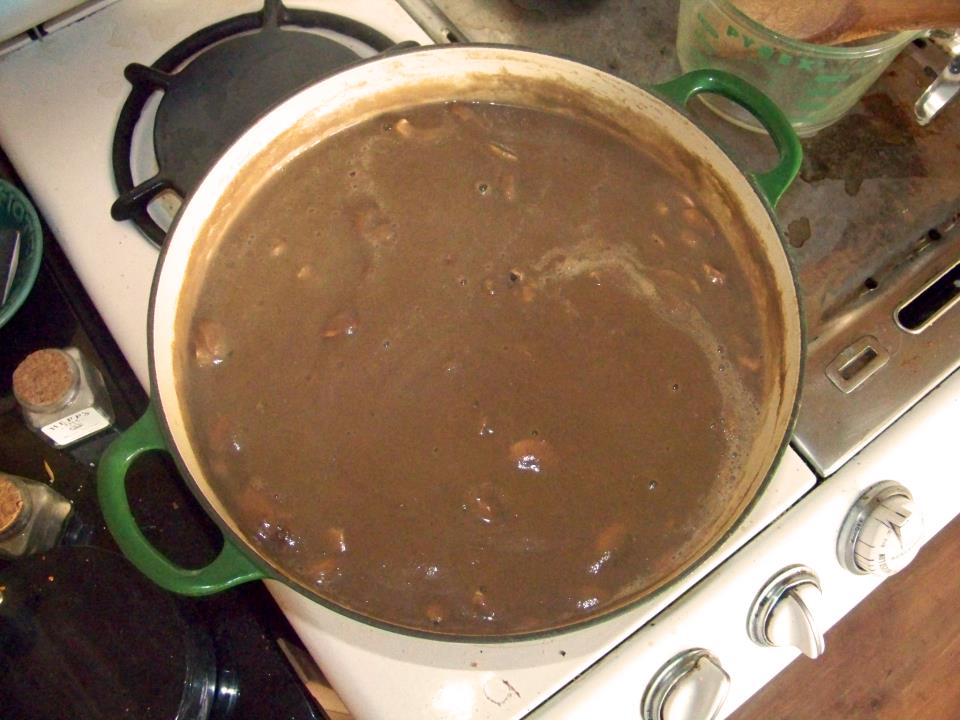
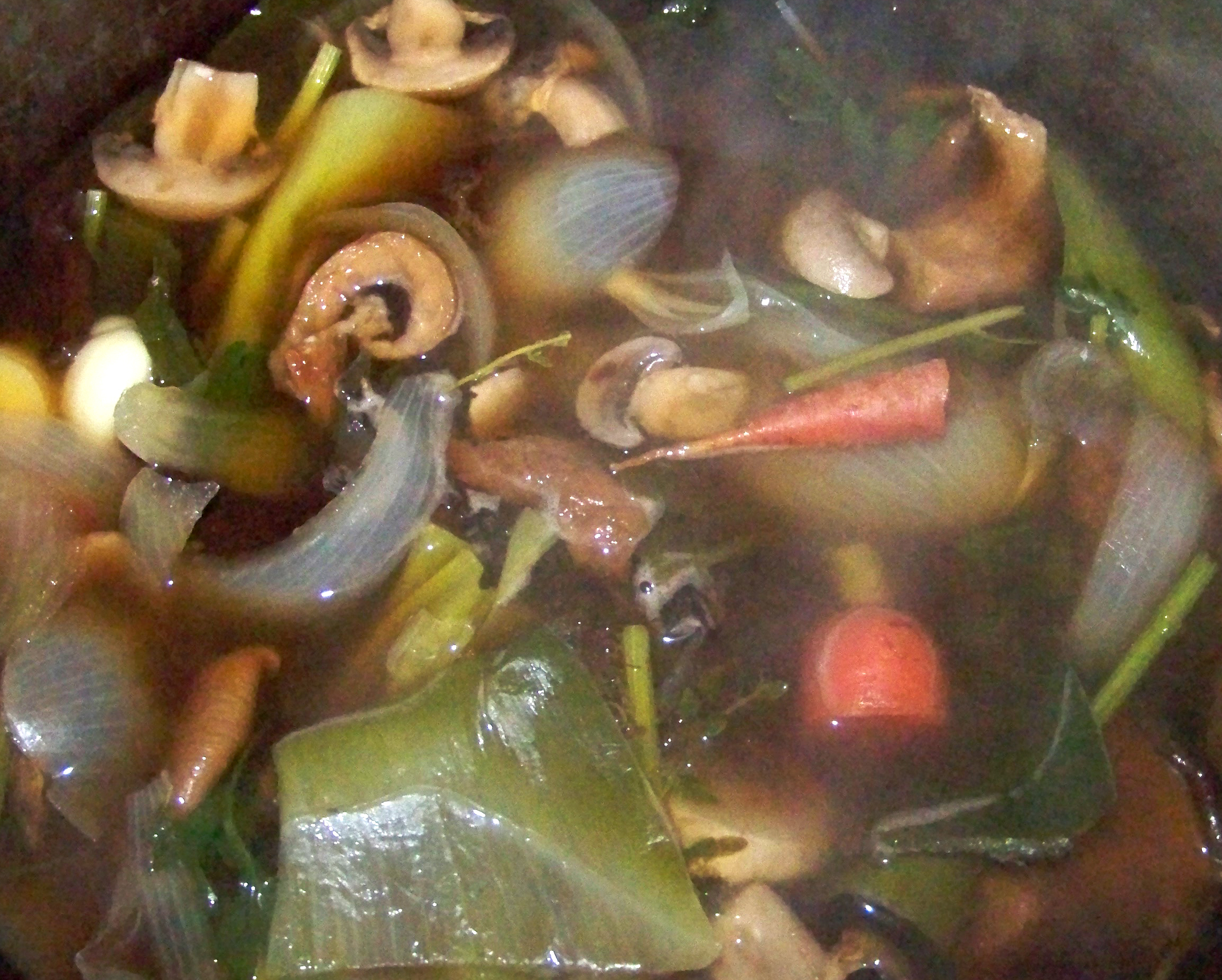
I made a mushroom stock from water and leeks and carrots and parsley and garlic and dried and fresh mushrooms (dried oyster and black trumpet mushrooms, fresh Eryngii, Maitake, and Bunapi mushrooms), then I sautéed a bunch of fresh mushrooms (I think there were seven different varieties of fresh mushrooms in the soup) and some spices, combined the whole lot (mushrooms, homemade mushroom stock, a bit of olive oil, a little fresh rosemary and oregano, and some salt and pepper) in the Vita-Mixer and puréed like a crazy man.

Sautéed and puréed fresh mushrooms

Sautéed and puréed fresh mushrooms

[Incidentally, there are consequences to puréeing hot soup in a food processor whose lid has been too securely clamped; the steam forces the liquid out of the container at high pressure in directions hitherto unimagined at a velocity just barely less energetic than an Olympic gymnast’s free-form floor event. Live and learn.]

543101_4367384215490_1311006759_n

The resulting soup — at least the part of it that I didn’t have to wipe off the cabinets, counters, and floor — was magnificent; creamy, hearty, aromatic. And I owe it all to the wonders of what might be the single most essential countertop kitchen device other than the toaster — the VitaMix[er].

Gluten Allergies — Part in our bodies, part in our minds?

0

no gluten

An interesting post by Alan Levinovitz in the July 9th issue of Slate suggests that the current mania for gluten-free food may spring from a psychological, as well as physiological, condition. Setting aside for the moment the 1.5% or so of the population that has celiac disease or wheat allergies, for which there is medical documentation, I’ve run across a great number of people who say they just feel better on a gluten-free diet.

Quoting from the Slate article, “Scientists are applying themselves to the riddle, and last February Slate’s Darshak Sanghavi reported on an Italian study that confirmed the existence of gluten intolerance (“nonceliac wheat sensitivity”) as a third, “distinct clinical condition.” In the study, one-third of patients who self-identified as gluten intolerant did in fact experience symptom relief after adopting a gluten-free diet. Case closed, right? Pass the gluten-free pasta.

Not so fast. An important implication of the study is that two-thirds of people who think they are gluten intolerant really aren’t. In light of this, the even-handed Sanghavi suggested that “patients convinced they have gluten intolerance might do well to also accept that their self-diagnosis may be wrong.”

The mind is a powerful influence on the way we feel, so even if there is a significant psychological component, that most assuredly doesn’t invalidate the positive effects that many people report when going gluten-free.

You can read the entire article at Hold the MSG.

Thoughts?

Kicking it, and kicking it off

2
Gluten-free Chocolate Chip Cookies

Gluten-free Chocolate Chip Cookies

When I was a wee sprout, the first real food I ever got to make “by myself” was chocolate chip cookies. The “by myself” is in quotes because I was performing under the hawk-like eye of my maternal grandmother, in whose company I had spent many hours in the kitchen prior to my first “solo” flight.

Chocolate chip cookies are a pretty good place for the budding baker/cook/chef to start, because the recipe on on the back of the Nestlé Semi-Sweet Morsels package is fairly bulletproof. I’ve made my own mods over the years, adding ingredients ranging from malt to orange zest to ground-up Altoids, changing the sweetening agent mix, modifying the flour — graham flour chocolate chip cookies were a remarkable failure, and maybe someday I’ll be motivated to figure that one out — but I had never made gluten-free chocolate chip cookies until the 3rd of July, 2013.

I had interviewed Chef Thomas Keller for Style Magazine, the in-house publication of The Venetian and The Palazzo in Las Vegas, and part of that interview centered around the gluten-free craze, and how his restaurants (The French Laundry, Per Se, Bouchon, Ad Hoc) dealt with it. Turns out, he had commissioned one of his chefs, Lena Kwak, to develop a gluten-free flour that looked, tasted, and behaved like “the real thing.” It is marketed as Cup4Cup.

The flour is not inexpensive, but Gilt.com had one of its flash sales, and I bought a 25lb. bag of Cup4Cup for $69. [Yeah, I know that seems a fairly excessive way to jump into a new product, but it was a great deal.]

Long story short, I made a double batch with my standard recipe, and the cookies came out great. Really tasty, if I do say so myself, every bit the equal of the ones I’ve been making for the better part of half a century. Nicely done, Lena. And Thomas.

You can find Alton Brown’s interesting and informative — if somewhat cornily acted — program on chocolate chip cookie variations at http://www.youtube.com/watch?v=5MYuXRaW0B0. And here’s a link to Cup4Cup: http://www.cup4cup.com/about-us/.

************************************************
Gluten-Free Chocolate Chip Cookies [Double Batch Style]

5 1/2 cups Cup4Cup® gluten-free flour
2 teaspoons baking soda
2 teaspoons salt
2 cups (4 sticks) butter or margarine, softened
3 cups packed brown sugar
3-4 tablespoons vanilla extract
5 medium eggs, room temperature
4 cups (24-oz. pkg.) NESTLÉ® Toll House® Semi-Sweet Chocolate Morsels
2 cups chopped nuts

Preheat oven to 375°F / 190°C

Combine dry ingredients (flour, baking soda, salt) in one bowl. In a separate bowl, beat butter/margarine, sugar, vanilla until creamy, then add eggs and continue beating until they are incorporated. Gradually stir in flour mixture, chocolate chips, and nuts. Drop dough onto ungreased baking sheets. Bake for 9-12 minutes or until golden brown. [I turn the sheet midway through, because my oven doesn’t have evenly-distributed heat, but you probably won’t have to worry about that.] Remove from oven and put cookies on wire racks to let them cool. Eat, or serve to friends, or both.

************************************************

Temple of the Tongue is gonna be (I hope, anyway) a funky amalgam of cooking tips, restaurant reviews, interviews, links to videos, my magazine articles, all sorts of odds and sods about making — and eating — food. Friends have been bugging me to do this for years now, and I’ve finally caved. I hope this little journey we’re taking together will be enjoyable, or, as we used to say back in the radio days, “If you’ve had half as much fun today as I have… well, then I’ve had twice as much as you.”