A Sweet Spot Between Laura Calder and Martha Stewart

0
A beautiful book, in every way.

A beautiful book, in every way.

If you’ve been on this blog before, you’ll know that I’m all over exploring the unknown, from exotic ingredients like lutenitza and sriracha salt, to crazy science stuff, from sous vide to avoiding botulism. But today, let’s take some advice from The Far Side creator Gary Larson’s cow: “Don’t forget to stop and eat the roses.”

First time cookbook author Gwen Rogers is neither a trained chef (like Laura Calder) nor a multi-gazillion-dollar-crafts-and-style marketing juggernaut (like Martha Stewart), but in her new book Welcome to Honeysuckle Hill, she deftly threads the needle between the two, creating simple dishes that are simply gorgeous.

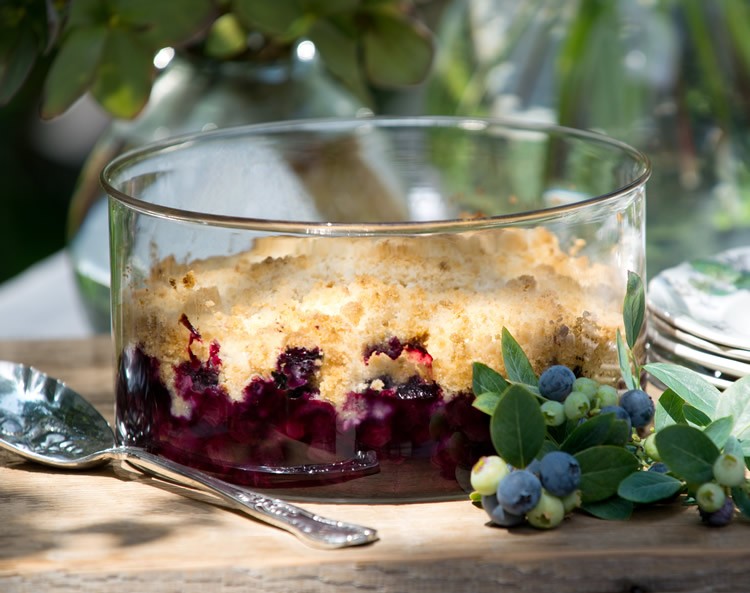
Take, as a for instance, her Blueberry Crisp with Almond Streusel recipe.

Blueberry Crisp with Almond Streusel. (photo by Renée Anjanette, courtesy Gwen Rogers)

Blueberry Crisp with Almond Streusel. (photo by Renée Anjanette, courtesy Gwen Rogers)

This is so simple, an eighth-grader could make it. But it looks, and tastes, delightfully sophisticated (in its rustic way).

Blueberry Crisp with Almond Streusel (adapted from Gwen Rogers’ journal)

FOR THE ALMOND STREUSEL:
¾ cup/150 g granulated sugar, unleveled
12 tbsp/170 g unsalted butter (for the vegan variant, substitute Earth Balance Vegan Buttery Sticks)
2 cups/256 g all-purpose flour, scant
¾ cup/115 g finely ground almond meal flour, heaping

FOR THE FILLING:
4 cups/400 g fresh blueberries, washed and dried
½ cup/100 g granulated sugar
1 tbsp/15 ml lemon juice, freshly squeezed
1 tsp/5 ml lemon zest

Preheat oven to 375°F/190°C.

FOR THE STREUSEL: In a medium bowl, combine sugar, all-purpose flour, and almond flour and mix thoroughly. Cut in butter until mixture becomes a coarse crumb. Set aside.

FOR THE FILLING: In a medium bowl, use a spatula to gently toss together the blueberries, sugar, lemon juice, and lemon zest. Let mixture sit for about 15 minutes. Place blueberry mixture into a 1.5-quart baking dish (9″ x 9″ x 5″ or 11″ x 11″ x 4″) and cover completely with Almond Streusel. Bake for approximately 45 minutes, until top is browned and berry filling is bubbling.

NOTE: This streusel makes enough for 2 (9-inch) pies or 2 blueberry crisps. If you only plan to make one, freeze the remainder for later use on your morning yogurt or evening ice cream. Serves 8.

Simple, elegant, tasty; the host's (or hostess') trifecta. (photo by Renée Anjanette, courtesy Gwen Rogers)

Simple, elegant, tasty; the host’s (or hostess’) trifecta. (photo by Renée Anjanette, courtesy Gwen Rogers)

Her Watermelon, Feta, & Mint Kabobs (pictured above) can be assembled in just slightly more time than it took to type this sentence, and yet they are a welcome and refreshing change from more traditional hors d’oeuvres, especially in the summer.

What Rogers brings to the table — quite literally — is a sense of casual elegance that’s all about making life easy on the chef/host/hostess and making life comfortable and welcoming for the guest. Her recipes will remind you that you don’t have to be a CIA grad to put together a menu that will leave your guests feeling happy and impressed, and you don’t need to deploy a squadron of minions to put together a table that looks thought through and stylish.

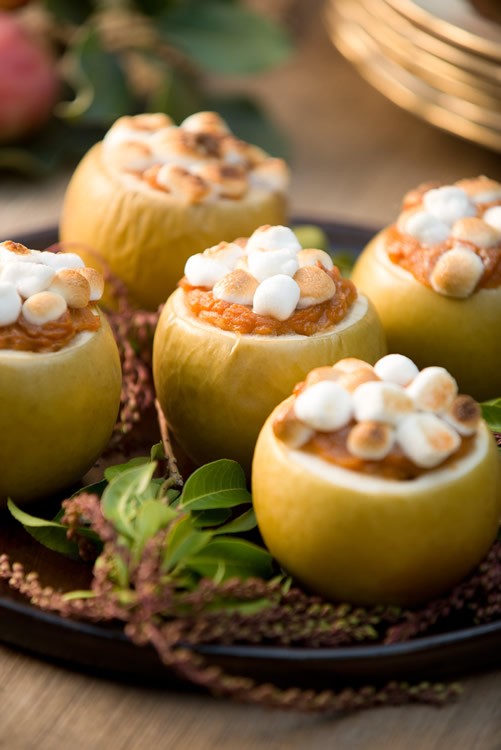
Ho do you like them yapples (apples stuffed with sweet potato)? (photo by Renée Anjanette, courtesy Gwen Rogers)

How do you like them yapples (Granny Smith apples stuffed with sweet potato)? (photo by Renée Anjanette, courtesy Gwen Rogers)

And when it comes to the book itself, the photography is a visual feast comparable to the actual foodstuffs being described. The printing is voluptuous, replete with pictures of the author and her family that would give Giada De Laurentiis and clan a run for their money. It’s beautiful, inspiring, and empowering, and worth every centime of its $35(USD) price tag.

Welcome to Honeysuckle Hill can be purchased at Gratus, should you find yourself in Beverly Hills, or through the author’s website, http://honeysucklehillbook.com.

Fig Onion Rosemary, um… It’s a Jam! It’s a Conserve! It’s a Very Thick Sauce!

2
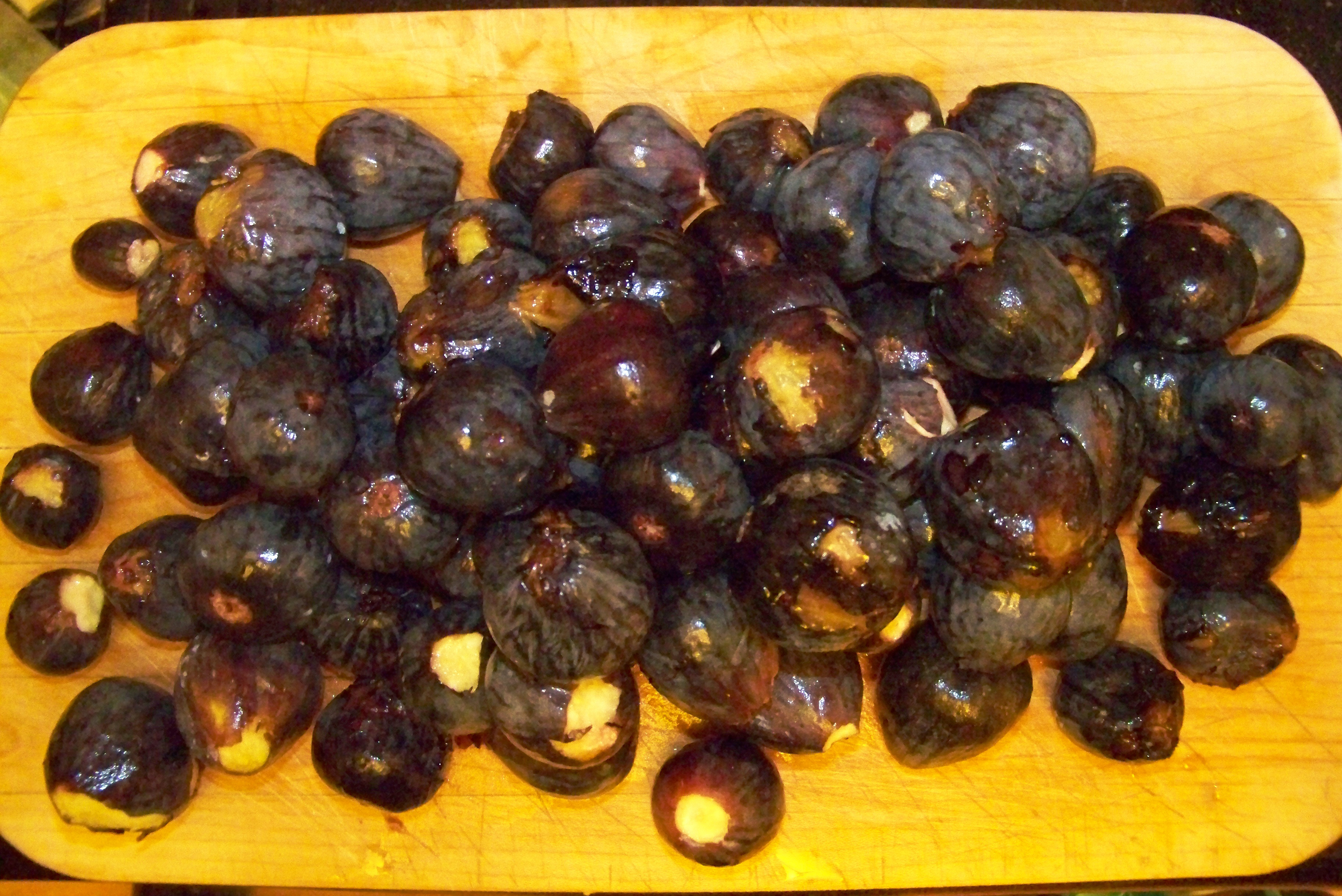
Destemed figs await being destiny.

It’s figgy! It’s oniony! It’s rosemary-y! It’s… Supercondiment!

When it comes to a project like this, seems to me there’s only two ways to go: 1) You can make just enough for yourself, and let’s face it, a little goes a fairly long way, or 2) If you’re going to bother with it at all, you may as well make a bunch, and share it with friends, neighbours, co-workers, etc. After all, you’re committing the same amount of time in either case, and in the latter mode, you can share the wealth. Sure, your cost of ingredients doubles, but by a back-of-the-napkin calculation, that came to about $12 in this case, less if you use red onion rather than Vidalia sweet onions, a cheaper wine, and can find a better deal on fresh figs than Whole Foods‘, all of which are well within pretty much everyone’s reach.

Clostridium botulinum, or Botox in the wild.  (Photo Credit: Dr. Gary Gaugler/Science Photo Library)

Clostridium botulinum, or Botox in the wild.
(Photo Credit: Dr. Gary Gaugler/Science Photo Library)

I’m going to say this up front, because food safety is paramount: THIS MUST BE REFRIGERATED. You can’t really preserve it in a standard water bath as you do other jams, because the pH isn’t low enough (or, put another way, the acidity isn’t high enough) to guarantee that our old pal Clostridium botulinum won’t rush in and ruin the day. The spore that causes botulism — and turns actresses of a certain age into Stepford Wife-looking creatures — is given a perfect home to reproduce in a fairly low-acid foodstuff that has been canned in an anaerobic (air-free) environment. You could get around this by adding a healthy dose of lemon or lime juice (or citric acid powder), but that would muck about with the flavour in a way that I wasn’t aiming for, personally. That said, if you do want to adjust the recipe and can it in the trad fashion, I’d recommend getting a pack of pH test strips and make sure you have the acidity at a pH lower than 4. Then the nasty little beastie is banished from the kingdom.

Now that I’ve frightened you, let me say that this is the same advice you’d get for canning meat, or asparagus, or mushrooms, or wax beans, or pretty much any veg that isn’t a tomato (and yes, I know a tomato is technically a fruit).

If, on the other hand, you have a pressure cooker/canner, you could do this no worries, so long as you get the canning temp above 240° F/115.6° C for a specific period (there are online guides), and it makes sense to err on the side of caution. Otherwise, you’re just going to have to treat it the same way you do pretty much everything else: put it in the fridge, and use it within 10 days or so. [Since it isn’t going to be in an anaerobic environment, botulism isn’t an issue, but as you well know, nothing in the fridge keeps forever… except that box of baking soda that doesn’t really absorb the odors the way it’s advertised to do.]

On to the good stuff.

This jam/conserve/very thick sauce is most excellent when served with stinky cheese, or as a glaze/condiment for a pork tenderloin, chops, or chicken. [Of course, since it’s vegan, it’s also good with crackers and flatbreads, not to mention garden burgers.] I tried to keep the sugar content as low as practicable, favouring the umami as much as possible.

Destemmed figs, awaiting their destiny.

Destemmed figs, awaiting their destiny.

FIG ONION ROSEMARY JAM/CONSERVE/VERY THICK SAUCE
INGREDIENTS:

45ml (3 tbsp.) extra virgin olive oil
3 large Vidalia sweet onions, sliced (about 1kg) (any onion can be substituted here)
5g + 1.25g (1 tsp. + 1/4 tsp.) sea salt or kosher salt
15g + 250g (1 tbsp. + 1 cup) turbinado sugar (white sugar works also)
1.25kg (2.75 lbs.) fresh Kadota figs (or whatever variety is convenient)
30ml (2 tbsp.) fig balsamic vinegar (or other balsamic vinegar or wine vinegar)
500ml (2 cups) red wine (2/3 of a standard bottle)*
15g (1 tbsp.) fresh rosemary, finely chopped

DIRECTIONS:

[Mise en place notes: Slice the onions and set then aside in a bowl; wash and destem the figs, then cut them in half (north/south) and set aside in a separate bowl. Chop the rosemary and set it aside. You can measure out your other moist and dry ingredients at this time if you want to, but nothing here is so time-sensitive that it’s really necessary.]

The only time the Sweet Vidalia onions made me cry was at the checkout counter.

The only time the Sweet Vidalia onions made me cry was at the checkout counter.

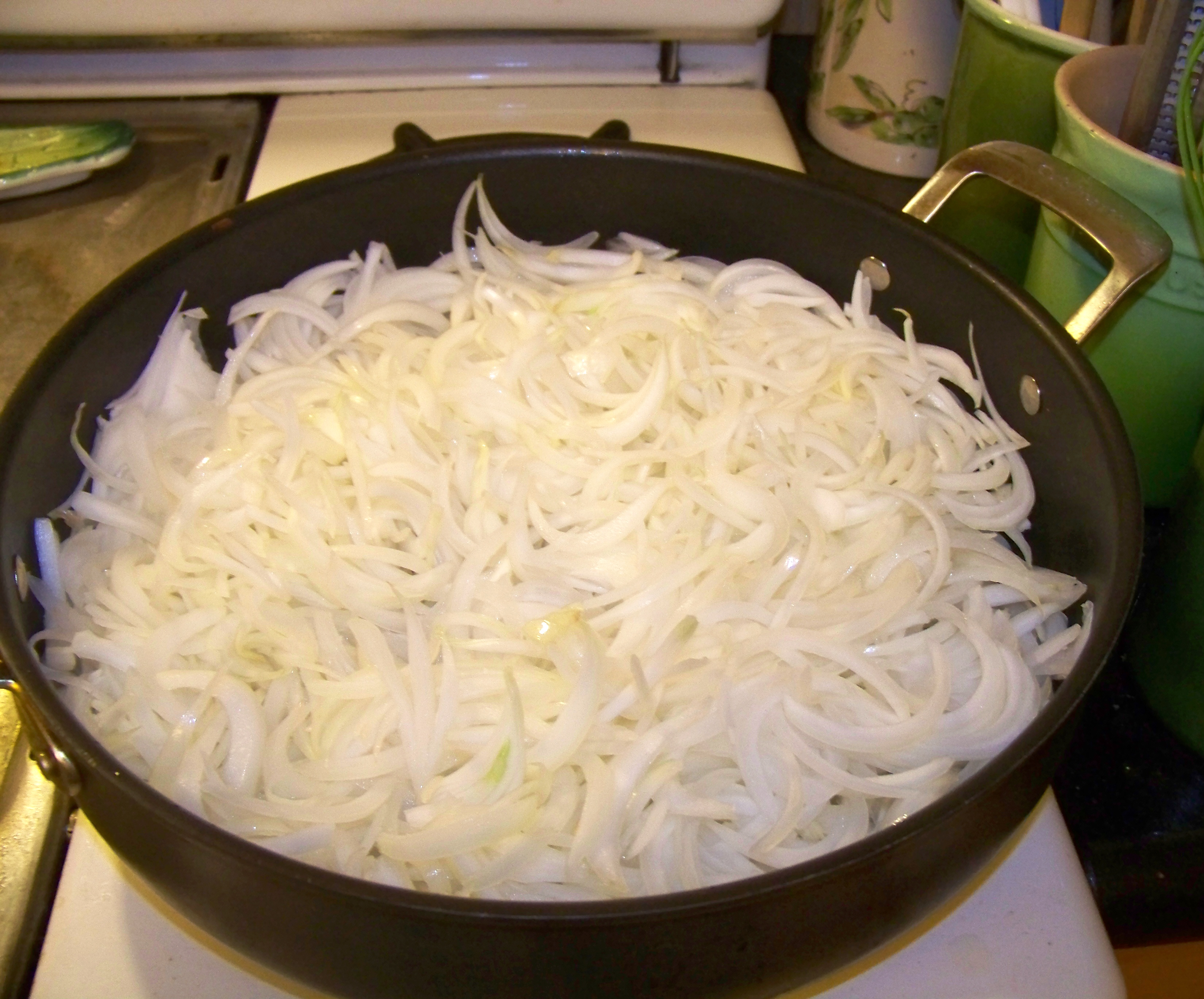
Heat pan on high and add the olive oil; when oil begins to shimmer, add the sliced onions, 5g/1 tsp. salt, 15g/1 tbsp. sugar, and stir briskly, to coat onions with the oil and mix in the salt and sugar. Reduce heat to medium high and allow onions to caramelize, about 20 to 30 minutes. [Note: If you haven’t done this before, it’s a little tricky. Stir them too often, and they don’t brown up. Stir them too infrequently, and they can burn. Don’t freak out if a couple of the onions look overdone; not a big deal. Timing is approximate depending on the amount of onions, your pan, and the heat of your cooktop.]

Onions, rosemary, and figs! Oh my!

Onions, rosemary, and figs! Oh my!

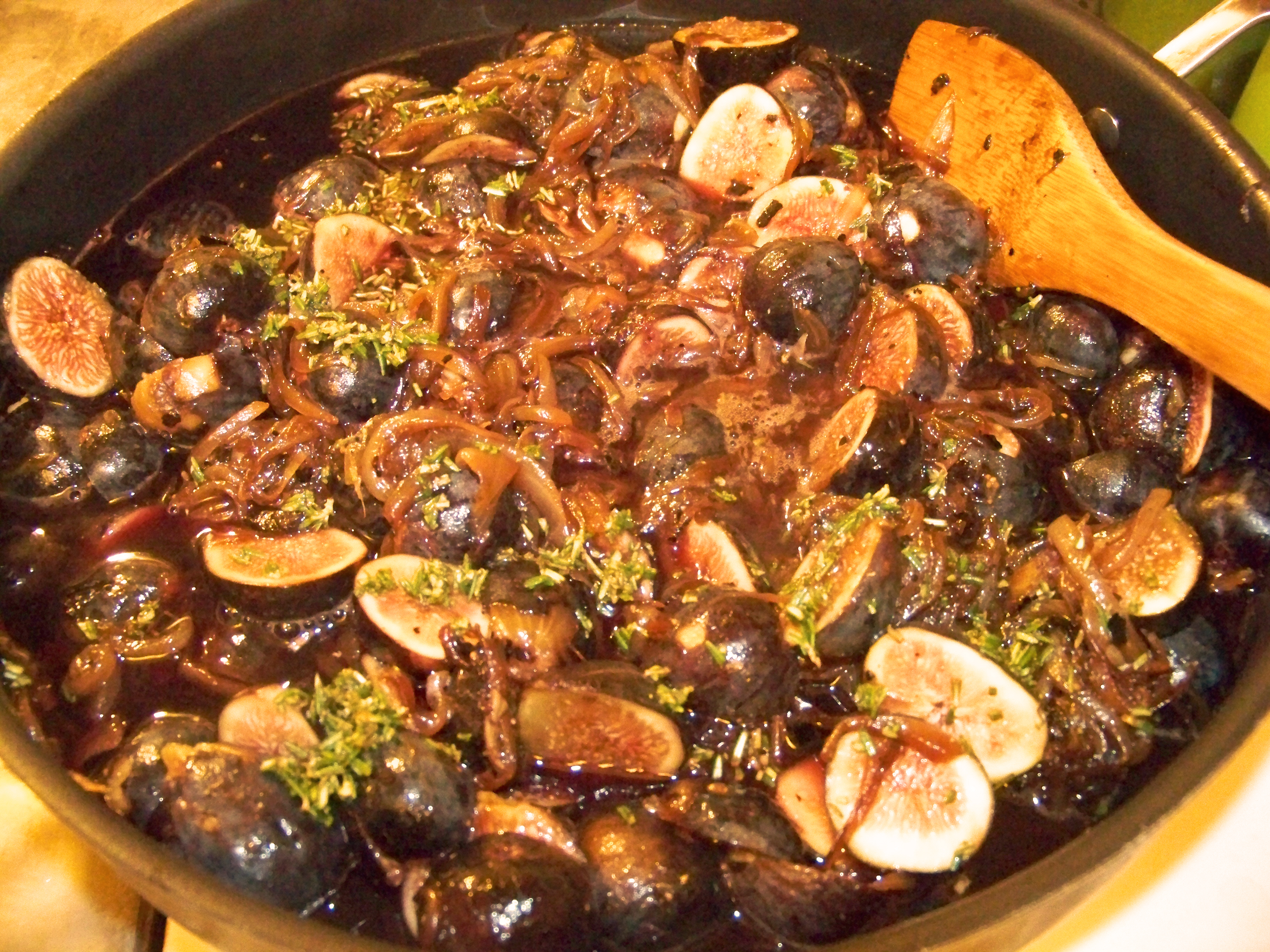
When the onions are browned, add the balsamic vinegar and wine to deglaze the pan, being sure to scrape any brown bits off of the bottom of the pan. Add figs and simmer until tender, about 20-30 minutes, stirring occasionally and pressing the figs against the side of the pan with a wooden spoon to break them up. Add the remaining turbinado sugar and salt (to taste) and simmer for an additional 20 minutes. If jam/conserve/very thick sauce gets too thick, add more liquid (either wine or water) as needed until the desired consistency is reached.
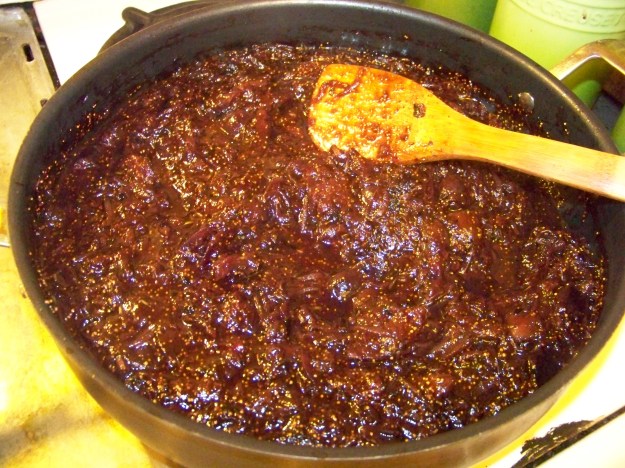
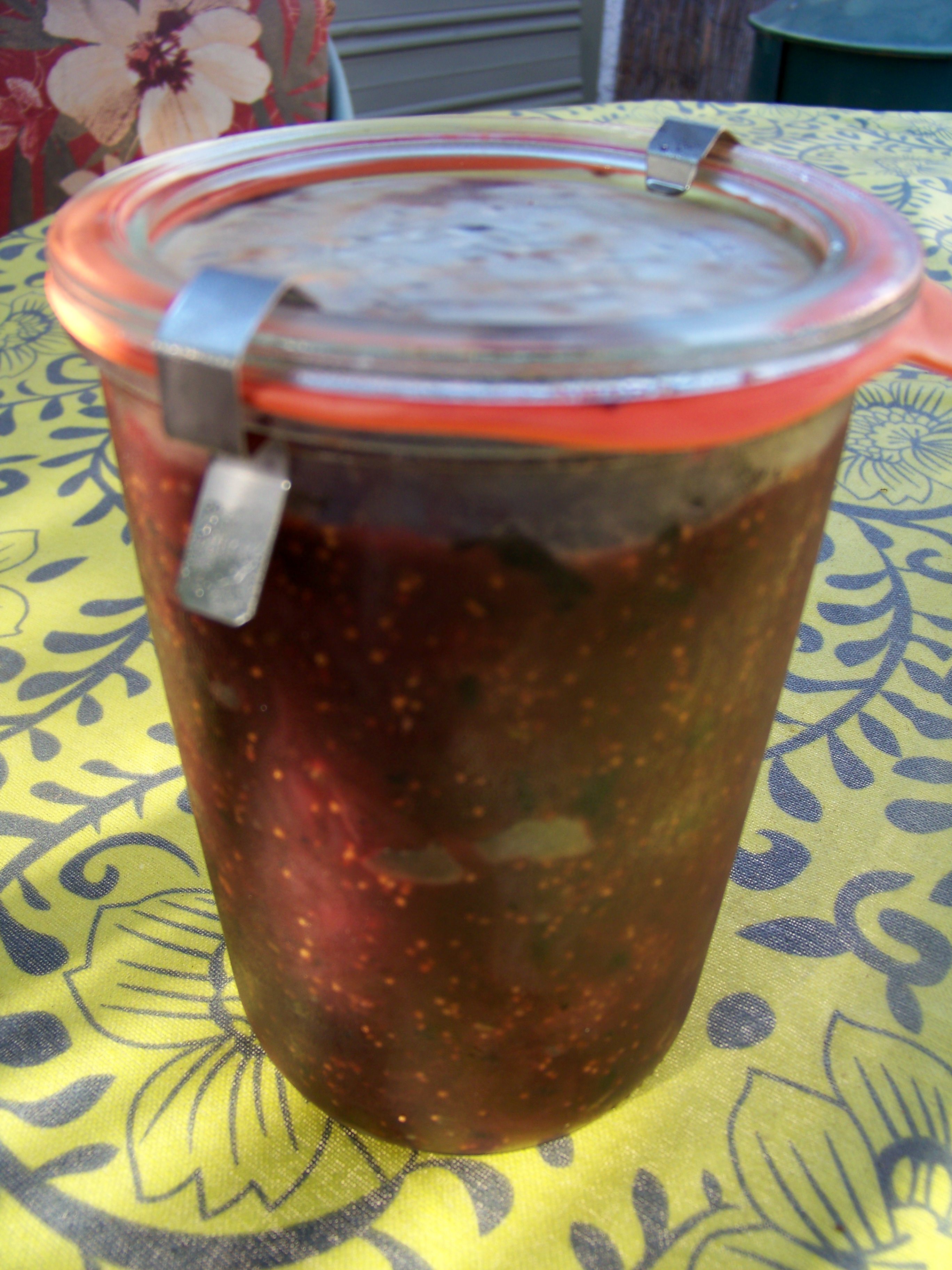
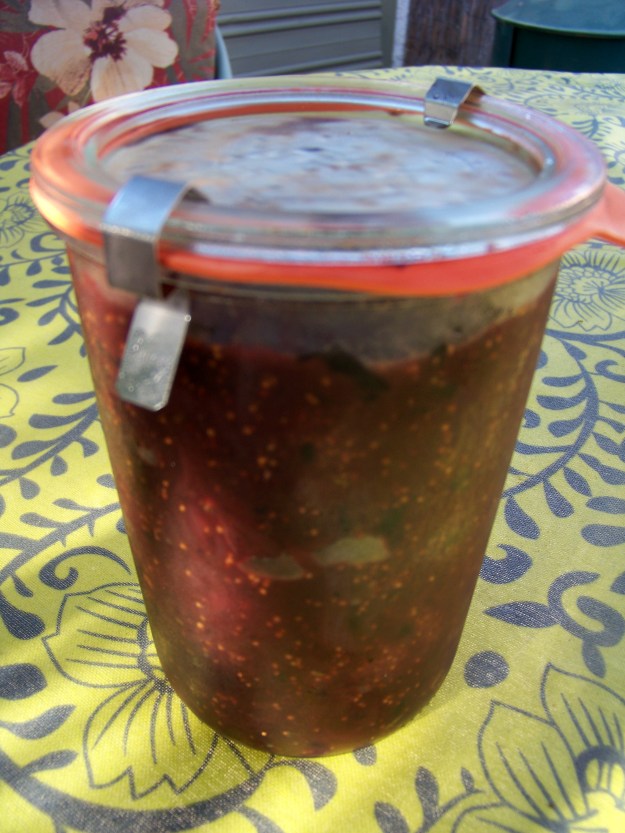
Jam, condiment, or very thick sauce? We report, you decide.

Jam, conserve, or very thick sauce? We report, you decide.

Allow to cool until it is safe to handle, then spoon into clean jars and refrigerate. Makes approximately 1.5 liters/just over 6 cups. Should be just fine for at least 7-10 days.

Fancier than it needs to be?

Fancier than it needs to be?

* A note on wine: I used Kendall-Jackson 2010 Vintner’s Reserve Summation Red, a blend of 28% Zinfandel, 27% Merlot, 14% Cabernet Sauvignon, 7% Petite Sirah, 3% Grenache, and 2% Petit Verdot. Why? I’d like to tell you that I did because it was the perfect match for the Brix (sweetness) level of the figs, but in fact it was around, I wasn’t particularly interested in drinking it at the time, and it wasn’t so expensive that I’d feel bad about having used it for making jam/conserve/very thick sauce. Any dry red will do; I may try a Pinot Noir or some other wine for the next batch, just to see how that works. You’ve probably heard this before, but you should avoid using any wine in cooking that you wouldn’t drink. So-called “cooking wines” are about as appetizing as Drāno®.

ADDENDUM:
I gave away a pint of the you-know-what to my pal Lisa Jane Persky, who is an actress, writer, artist, and a damn fine cook in her own right; here’s the chop she made with it. Nice.

Mmmmmm.

Mmmmmm.

ADDENDUM #2:
The other week, I attended a food festival at which restaurateur/radio host/generally cool individual Evan Kleiman was speaking about preserving tomatoes, and she said that (given the comparatively high pH of some newer varieties of tomato), she sometimes adds straight citric acid (which can be purchased either online or at many fine markets) to acidify the solution rather than adding lemon or some other citrus juice. The reason is that, while citric acid will make your jam/conserve/really thick sauce lower in pH (and hence, more sour-tasting), it won’t introduce any new flavour. You can buy pH strips or litmus paper to check to see if its pH is below 4. Alternatively, as noted above, you can pressure can the conserve/jam/really thick sauce. Or just stick it in the fridge. You’ll probably go through it faster than you thought.


Potatoes au Gratin sans Fromage (Vegan-style)

3
It's plane to see.

It’s plane to see.

We’ve been doing Meatless Mondays around the pad for years now, and that frequently means one of several standbys, often involving potatoes. [What can I say, I’m Irish.] My original intent had been to take a whack at Chef Thomas Keller’s Potato Pavé recipe, but time and energy conspired against me, so I opted for Potatoes au Gratin. As luck would have it, The Bride and I dined a few days ago at Crossroads, an excellent vegan restaurant in Los Angeles, and that inspired me to retool the cheese-oozing, cream-dripping, diet-busting fave of my youth.

Generally speaking, I’m not much of a fan of ersatz food products (diet sodas largely excepted). I’d much rather have a beautifully grilled portobello mushroom served like a burger than any sort of the Frankenmeats that often try to pass themselves off as beef patties. As a consequence, my first order of business was to strike off most of the over-the-counter vegan cheese substitutes available, as they more often taste like Firma-Grip paste with a side of FD&C Yellow No. 6 than anything resembling fromage. What I wasn’t willing to sacrifice, though, was the creamy, viscous, umami-laden mouthfeel of the real deal. Fortunately, I didn’t have to.

Gotta give some props here to Tori Avey’s blog, The Shiksa in the Kitchen, which published a recipe for Dairy-Free Saffron Scalloped Potatoes that launched me in the right direction. Basically, there are two parts to the recipe: The potatoes and onions, and the sauce. Here’s a list of ingredients:

100_4774100_4770100_4768

DAIRY-FREE, GLUTEN-FREE, VEGAN POTATOES AU GRATIN

For the Sauce:
2 tbsp non-hydrogenated butter substitute (I used Earth Balance)
3 1/2 tbsp flour (I used Cup4Cup gluten-free flour)
1 can (13.5 or 15 oz) coconut milk* — NOT THE NON-FAT OR LOW-FAT VERSION!
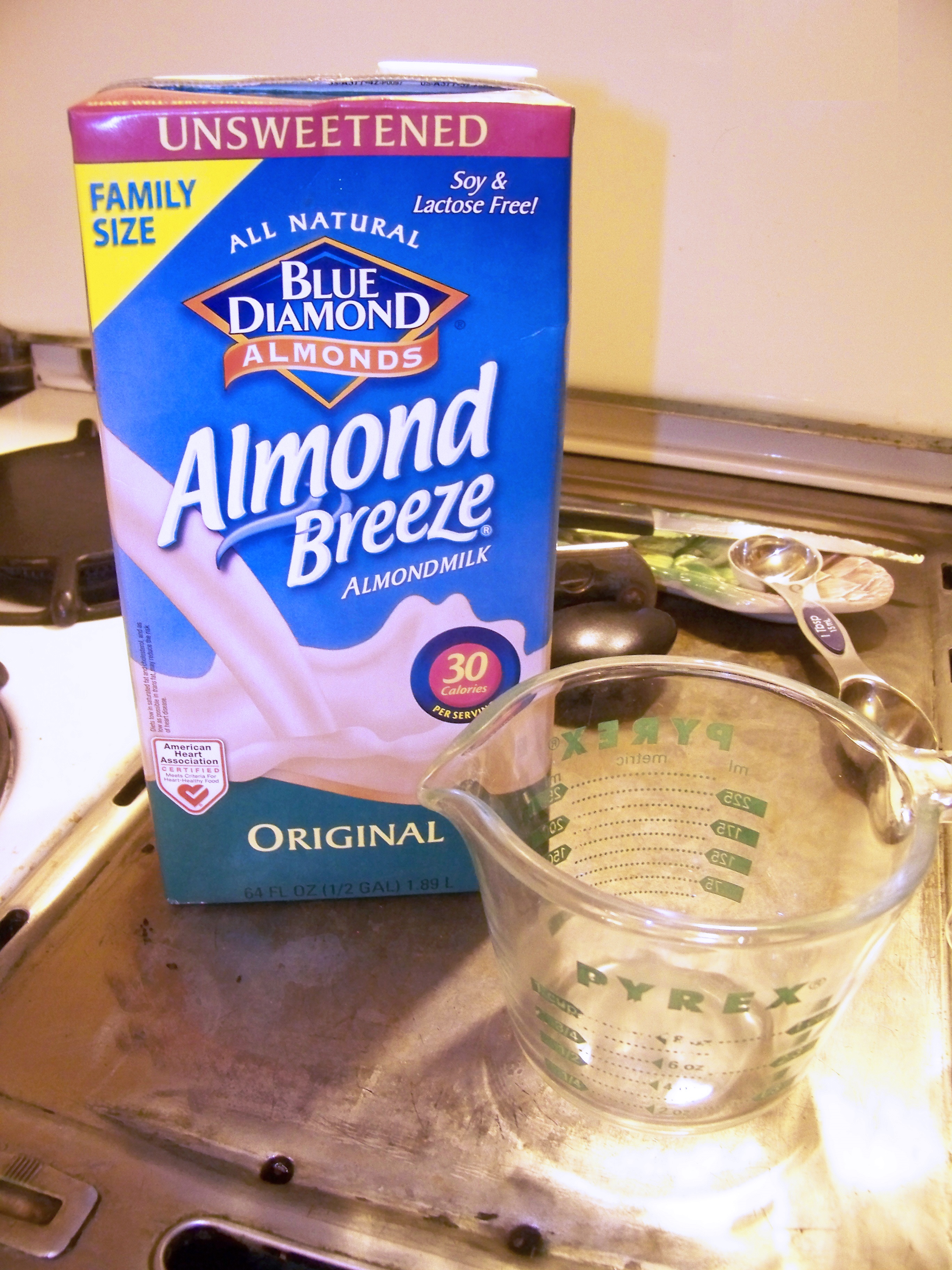
1 cup Almond Breeze almond milk, unsweetened
1 tsp sea salt
1 tsp finely minced garlic (or 1/2 tsp garlic powder)
½ tsp tamari sauce (gluten-free soy sauce)
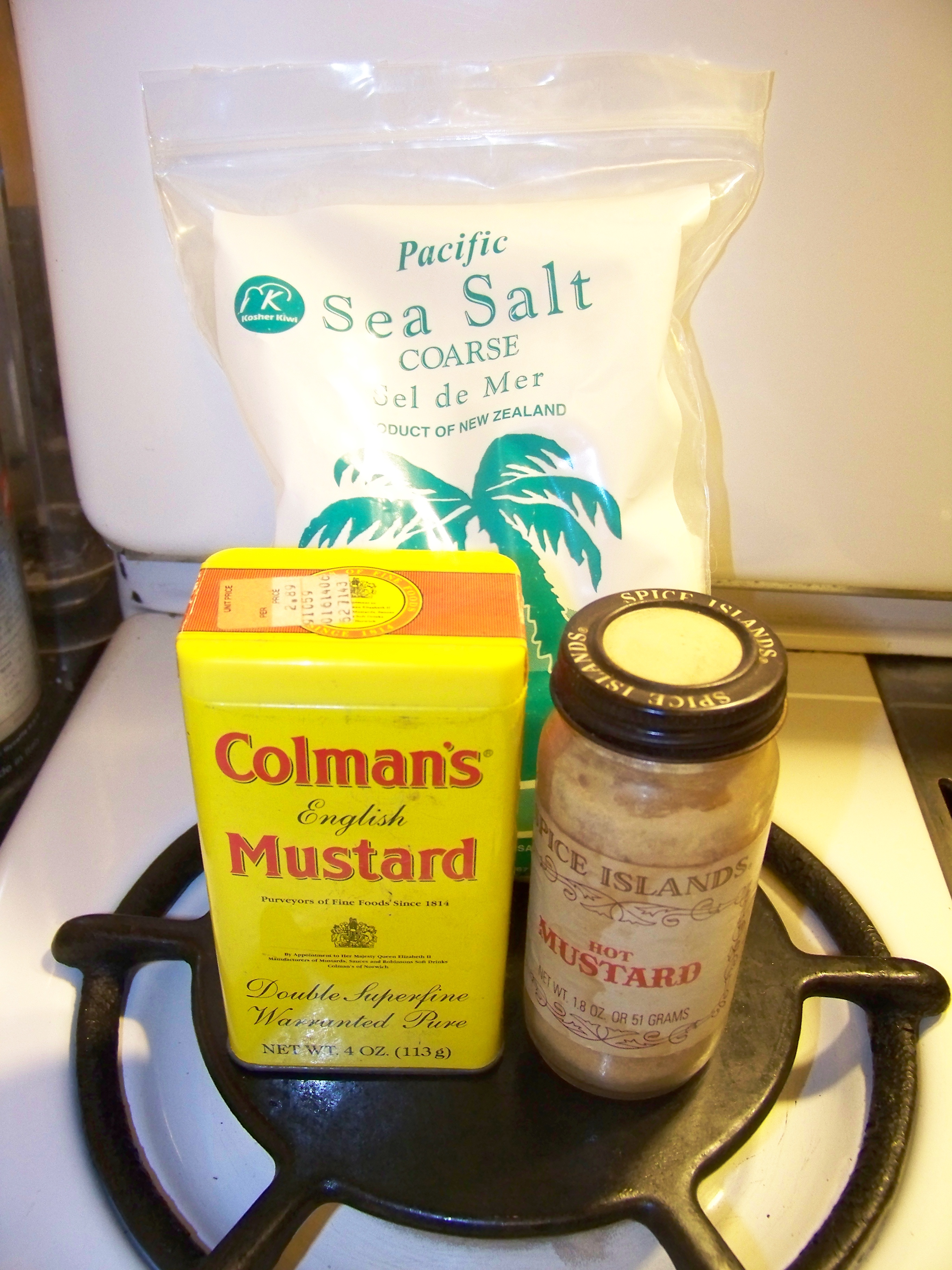
1 ½ tsp mustard powder
¼ tsp Piment d’Espelette (or hot paprika or cayenne powder)
1 tsp celery flakes or parsley flakes (optional)

For the Taters:
4-5 lbs Russet potatoes (you could use Yukon Gold as well, but Russets are way cheaper)
1 large onion
several dashes paprika for colour and presentation, optional

You have a couple of choices here (more if you are not acting as your own sous chef, which I was). Either make the sauce first (which I did), or slice the potatoes and onions first. If you are slicing the veggies first, please feel free to skip ahead. [Do remember to put your potato slices in a bowl of cold water to keep them from going brown while you’re working on other stuff.]

Making the Sauce:

Making the roux.

Roux the day.

Melt the butter substitute (or margarine, even if it’s not called that) over medium heat in a saucepan or pot, and whisk in the flour a tablespoon at a time, stirring more or less constantly to make a roux. Let it brown a bit, maybe two minutes or so, and then begin adding the coconut milk, about 1/3 of a can at a time. [The full fat variety of coconut milk will probably have a big fatty plug at the top of the can; this is a good thing. Smooth it as you whisk.] Then add the almond milk and spices, continuing to whisk all the while (nothing says “M-m-m-m, tasty!” quite like a thumbnail-sized lump of mustard powder in your finished dish). The reason I used tamari rather than regular soy sauce was to keep the recipe gluten-free; if you don’t care about that, your basic Kikkoman will work just fine. All that need be done from here on is to keep it at a simmer; it only has to be warm (and liquid) enough to pour over the potatoes. Cover it (to keep it from reducing) and turn the heat down low while you focus on the next task: preparing the potatoes.

Preparing the Vegetables:

Spud ends.

Spud ends.

First, preheat your oven to 350ºF / 175 (actually 176.67)ºC

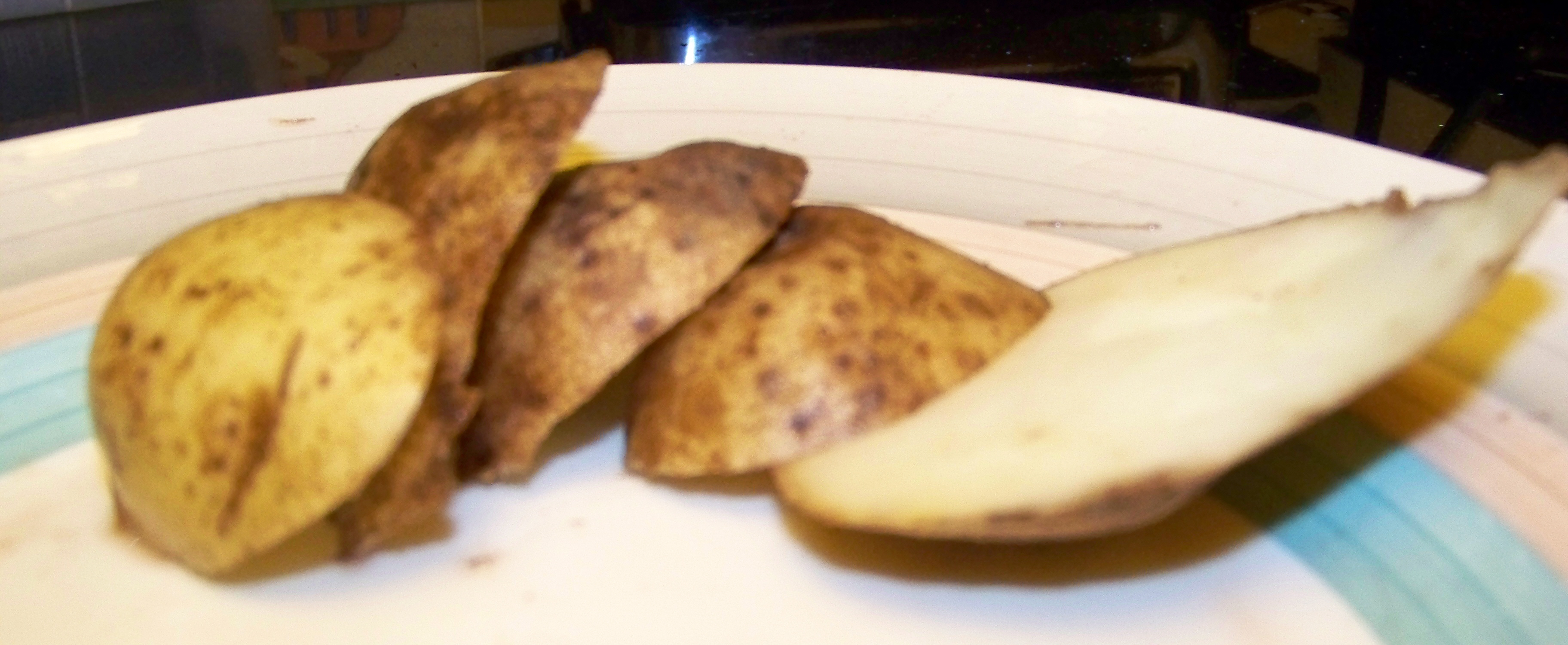
The potatoes (peeled or unpeeled, according to the chef’s whim) should be sliced to a thickness of about 1/8″ or so. More skilled craftsmen than I can perform this task handily with nothing more than a knife, but I use a mandoline (as you can see at the top of the post), and because I am a manly and foolhardy man, I use it without the safety guard. [THIS IS NOT RECOMMENDED!] Should you find the safety guard oppressive, one alternative is to wear a steel mesh or Kevlar glove. But in the true Anthony Bourdain spirit of recklessness, well, I don’t do either of those things. That being said, not only is slicing off your fingertips or shaving your palm — a real possibility! — painful and disfiguring, it also invalidates the recipe’s claim to being vegan. (Blood, even accidentally spilled, is an animal product.) When all the potatoes are sliced (and put in a bowl of water to prevent their discolouring), repeat the process with the onion.

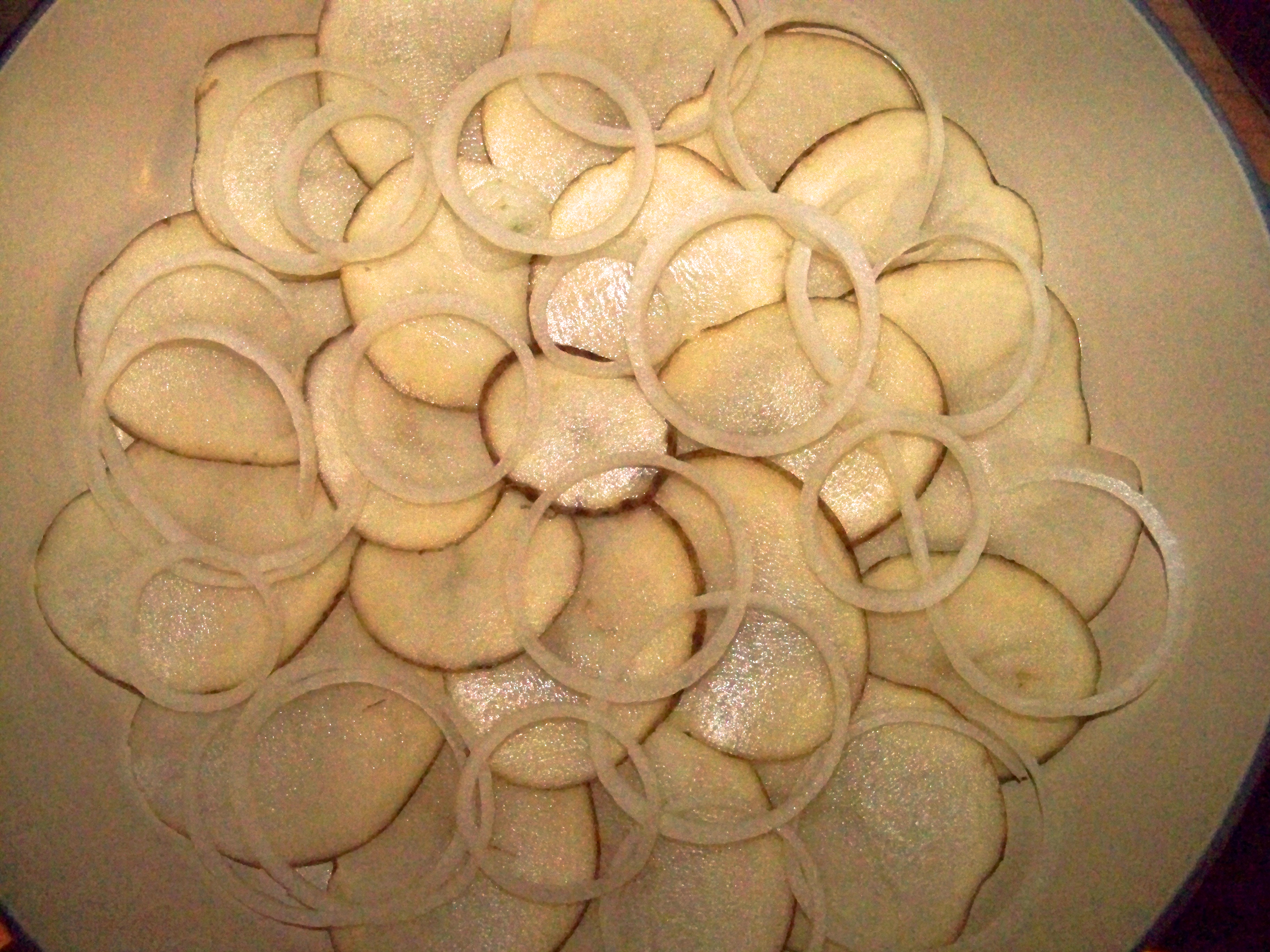
Potatoes and onions, ring the bells of St. Bunion's.

Potatoes and onions, ring the bells of St. Bunion’s.

Layer the potatoes and onions into a greased large baking dish or Dutch oven (I used a 5 qt. Le Creuset Braiser, which worked magnificently). First set down a layer of overlapping potato slices, then scatter some onions on it, then ladle some of the sauce over. Lather, rinse, repeat, until the dish is full (I had about 1/2 lb of sliced potatoes left, which I put in the fridge, and will roast or fry later). Sprinkle some paprika on the top, if you so desire.

Ready for some ovenizing.

Ready for some ovenizing.

Cover with foil (or put on the lid), and pop it into the oven for 60 minutes at the aforementioned 350ºF / 175ºC. By then, the potatoes should be soft and yield easily to a fork. Give them another 10 minutes in the oven uncovered, and finish them off with about 5 minutes under the broiler to brown the top (be watchful during this process, because it can go pretty fast, depending on the distance between the dish and the flame).

Remove from oven, and allow them to cool for about 10 minutes.

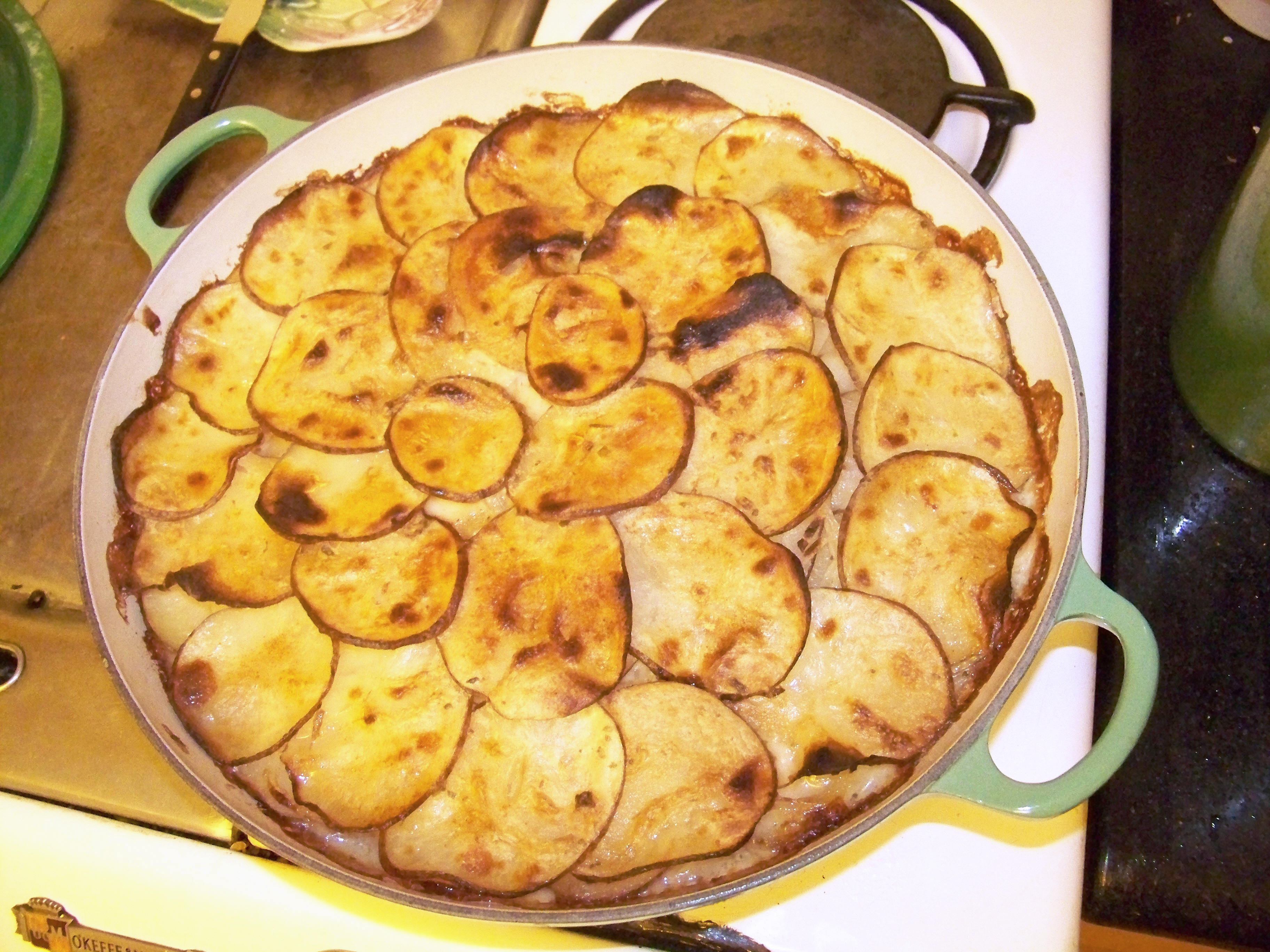
Brown is beautiful.

Brown is beautiful.

Coda: I realized (a little too late) that some diced green chiles would be a terrific addition to the sauce; I heated some up and spooned them over top, but it didn’t have quite the same effect. Also, you may want to add some salt (or allow your diners to) at the table, as it was a tiny bit shy on the NaCl for my taste. And a little fresh ground pepper is also nice.

*The full-fat variety of coconut milk runs about 700 calories a can, which is a not inconsiderable amount, but don’t be tempted by low- or non-fat substitutions, because they won’t provide the same mouthfeel. And when you consider how many fewer calories it has than cream (52 per ounce vs. 103), it’s totally worth the “splurge.” [Also, the almond milk is only 7.5 calories per ounce, and given that you’ve also left out all the cheese, there’s a pretty dramatic reduction in calories compared to the standard au gratin recipe.]

The Incredible Hulk in a glass

0

incrediblehulkstylinonline_2270_78360219

The Bride and I were dining at Paiche, an excellent (and highly recommended) new restaurant in Marina del Rey, whose menu offers several intriguing non-alcoholic concoctions. As designated driver that evening, I recused myself from their wonderful wine list, but I wouldn’t settle for fizzy water as my sole potable, so I selected a drink they call The Incredible Hulk. [Cue the ever-litigious Disney (who now owns Marvel Entertainment), likely into its third draft of a cease-and-desist order; by the time you get to the restaurant, it may be called The Bruce (or David) Banner, or something else entirely.]

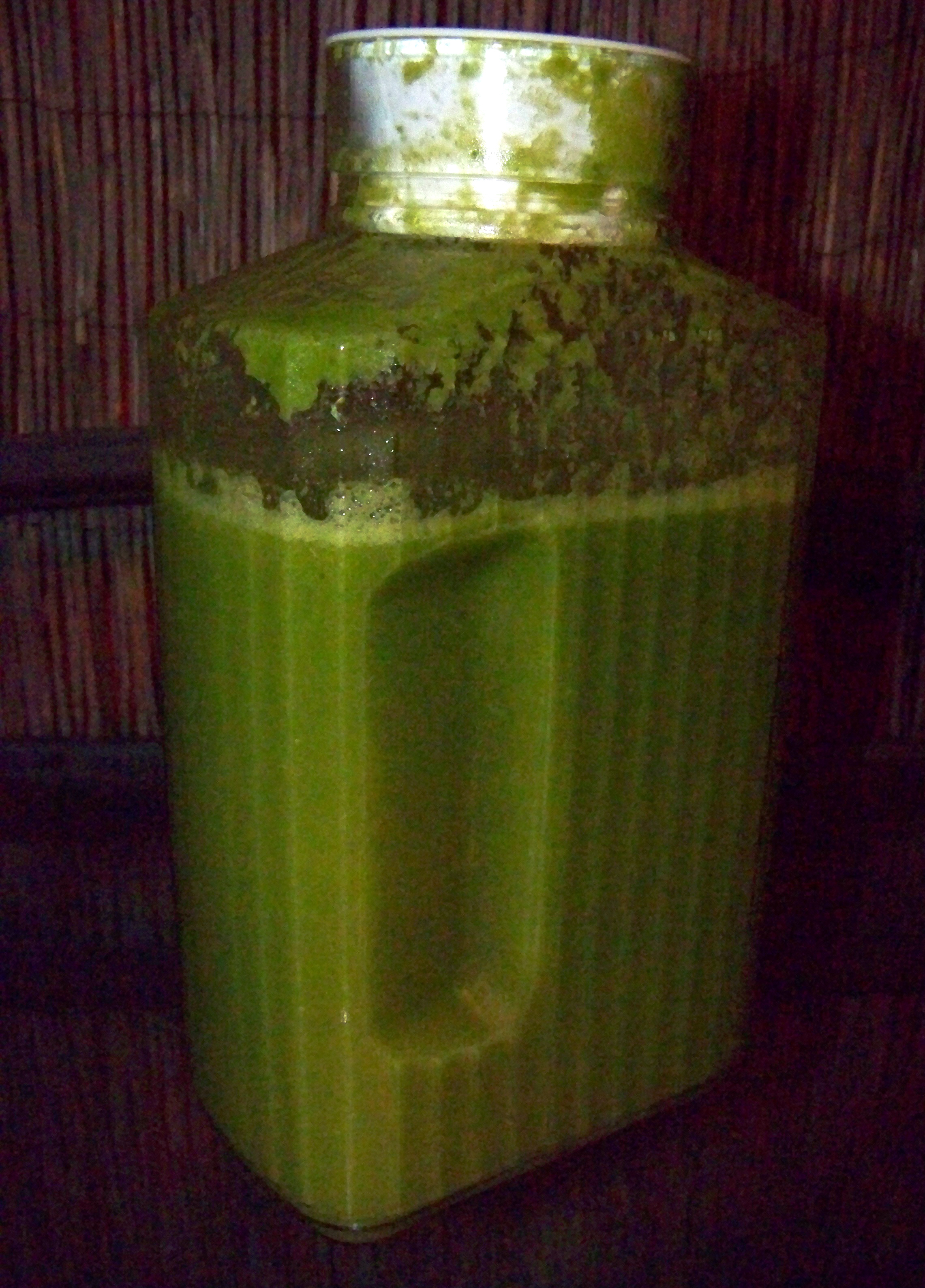
The Incredible Hulk consists of five simple ingredients: parsley, cactus, orange juice, pineapple juice, and celery. [Here’s a mnemonic for the ingredient list: CC POP.] Living as I do in the Los Angeles area, rounding up some cactus (known at the Mexican grocery store as nopales) was no big deal, and the rest of the items are available anywhere. I kinda cheated and bought pineapple juice and orange juice, rather than making them myself from fresh fruit, as I suspect the restaurant does. I revved up the old Vita-Mixer and ground up six large celery stalks, a pound of chopped nopales (do NOT buy the pickled version or the ones packed in brine for this!), and a bunch of curly parsley with the bottom inch of the stems removed.

Incredible Hulk sits on stove top without fear

Incredible Hulk sits on stove top without fear

I’ve discovered that adding a citrus juice (or any acidic juice) to cactus juice causes foam to rise more or less immediately, so don’t worry if that happens; you can skim it off or discard it. I just mixed it back in. I prefer my juice a little “greener” than the one Paiche serves, so I used less of the orange-pineapple juice blend than they do, but you can experiment to find your sweet (or not-so-sweet) spot.

Looking for vodka in all the wrong places

Looking for vodka in all the wrong places

THE INCREDIBLE HULK
1 bunch parsley
1 pound nopales (cactus), chopped
6 large celery stalks
32 oz. orange juice
32 oz. pineapple juice

Blend greens and a little bit of the orange and pineapple juices (mixed 50-50) in a Vita-Mixer (you’ll need a pretty powerful blender or food processor to deal with the pulpiness of the celery and nopales) until smooth. [You will likely have to do this in two or three batches.] Strain if you wish (I didn’t). Pour half a glass of the greens mixture into a glass with an equal amount of orange-pineapple juice. Stir and serve over ice. Go on rampage. “Hulk smash!”

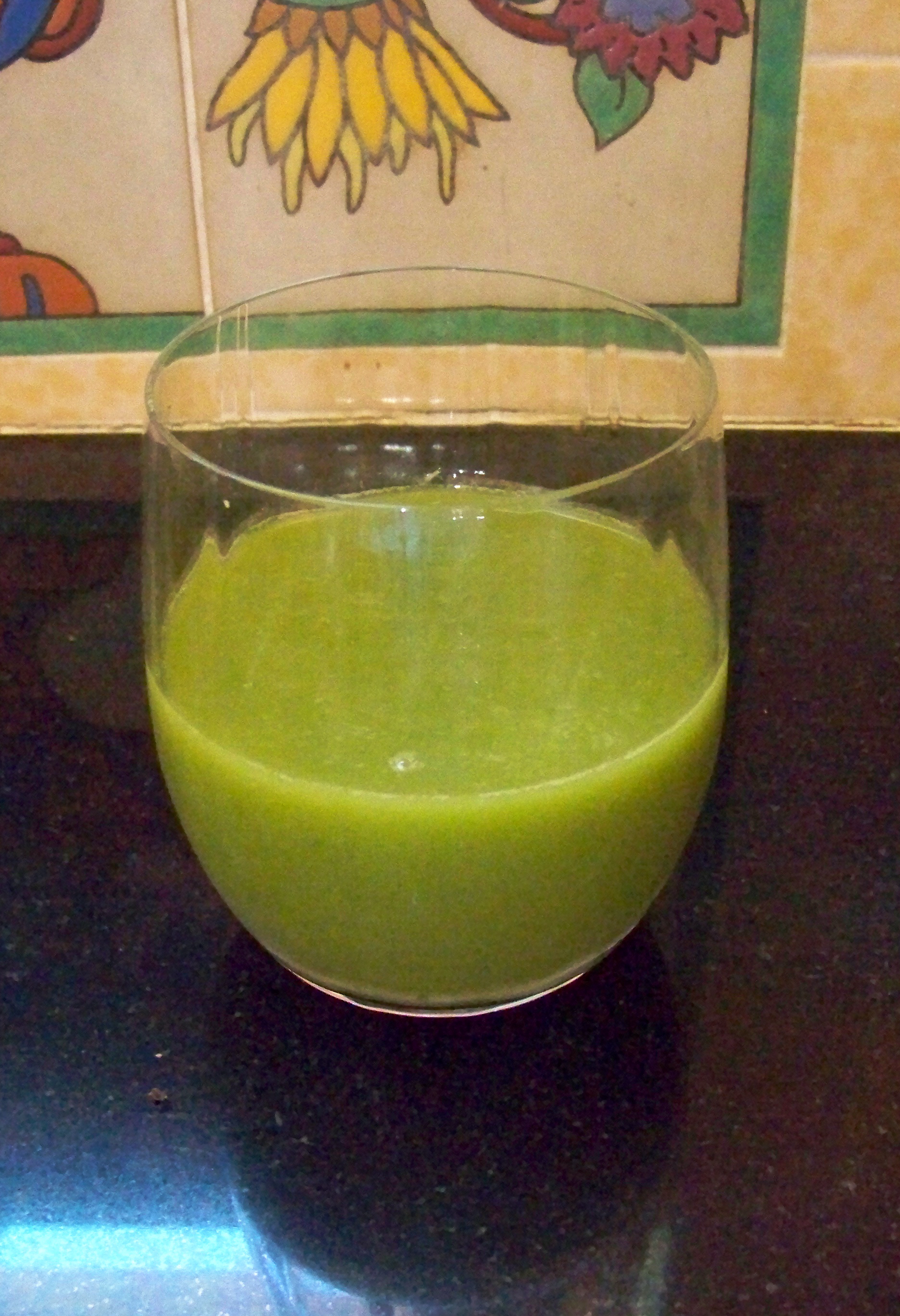
A refreshing glass of the delicious beverage

A refreshing glass of the delicious beverage

Balkanizing My Kitchen, Part two — Ajvar and Pinjur

3
Oops. That's not Ajvar and Pinjur, it's Akbar and Jeff from Life in Hell, with apologies to creator Matt Groening.

Oops. That’s not Ajvar and Pinjur, it’s Akbar and Jeff from Life in Hell, with apologies to creator Matt Groening.

If you happened to see my earlier post on lutenitza, you’ll recall that I promised to return with a further exam of its kissing cousins, ajvar and pinjur. First, let’s have a look at the real deal.

The REAL Ajvar and Pinjur.

The REAL Ajvar and Pinjur.

Although thought to be Serbian in origin, ajvar (pronounced “EYE-var”) is said to have derived its name from the Turkish word havyar, which shares an etymology with “caviar.” [In Russian as well, the word ikra (or икра), can mean both traditional caviar and also a vegetable purée or paté.] It’s made from red peppers, aubergines, garlic, oil, and spices. Both lutenitza and pinjur, which share many ingredients with ajvar, generally include tomatoes, while ajvar does not. Perhaps the most striking difference between ajvar and the other two, though, is its consistency; you can turn a room temperature jar of ajvar upside down without spilling its contents. Pinjur and lutenitza, not so much. Depending on the recipe, ajvar may be made with smoked or roasted peppers or not; in this bottled version, the peppers are not roasted, giving it a lighter, brighter flavour than either the pinjur or the lutenitza.

The FatFree Vegan Kitchen blog has an excellent (and quite healthy) recipe for homemade ajvar, as does the Kitchen Window blog at NPR (where they dub the dish “Serbian Salsa“). In both cases, these recipes opt for roasting the red peppers.

Pinjur (also known as pindur, pindjur, pindzur, and pinđur) is widely available throughout Serbia, Bosnia, Herzegovina, Bulgaria, and Macedonia. Just in case you’re unclear on just where all these places are, here’s a map.

For the geographically challenged, this is where ajvar and pinjur come from. Photo courtesy Univ. of Texas Library.

For the geographically challenged, this is where ajvar and pinjur come from. Photo courtesy Univ. of Texas Library.

Unlike ajvar, which is more of a spread, pinjur (pronounced “PEEN-jur”) resembles a salsa or sauce. And, like salsas and sauces, it comes in a fairly wide variety of styles. It’s generally characterized as being an aubergine (eggplant)-based sauce/relish, rather than a roasted pepper sauce/relish, even though lutenitza generally contains aubergines, and pinjur generally contains roasted peppers. Confusing, ain’t it? In my limited experience so far, lutenitza is a little spicier than pinjur, but there are so many variants on the recipes, it would be impossible to make a generalization that really sticks. Dealer’s choice here.

Both pinjur and lutenitza are terrific mixed in with rice, ladled over vegetables or meat, or as a dip for chips; they can be served either warm or at room temperature. Both are gluten-free and vegan (as is ajvar), and they’re all a great way of dealing with the overabundance of vegetables from the summer garden, offering a tasty treat for home canning enthusiasts well into the winter months… provided you can wait that long to break into those jars.

The Food Network’s UK website has a tomato and pepper-free recipe for pinjur that relies heavily on aubergine for its base, but if you want something closer to the commercially available versions, you can opt for this recipe from the Healthy Food Base blog.

As the Macedonians would say, “Cреќен јадење!” [transliteration: “Sreḱen Jadenje!”] [translation: “Happy eating!”]

In Praise of a Very Fancy Blender

3

100_3529a

First off, let me say from the outset that I’m not a “juice guy.” Sure, I’ve seen the infomercials and heard the testimonials and been subject to in-store demos, just like the rest of us. And I love juice; very few liquids on Earth bring me greater pleasure than a fresh-squeezed glass of blood orange juice. But I’m not persuaded that juice can rightly claim the curative powers that its disciples ascribe to it. So it wasn’t for that reason that I found myself on Craigslist, obsessing over finding my first VitaMix (or Vita-Mixer, as it was known then).

Last year, I had promised to make mushroom soup for a Thanksgiving gathering at our friends Rick and Lori’s house, and I knew that some of the attendees had dairy issues. Accordingly, I mused aloud on my FB page as to whether I should substitute almond milk, or cashew cream, or some sort of ersatz non-dairy sour cream substitute as a thickening agent, to give it a “creaminess” without using cream. My pal (and head chef at Papilles Bistro in Hollywood) Tim Carey commented, “I never use cream. Get yourself a VitaMix.” Okay. When you get advice from the guy who has made the best cauliflower soup you’ve ever had in your life, it makes sense to listen.

VitaMix products are expensive. No, really. They are. Very. Expensive. Then again, so are Maybachs, and for much the same reason. I’m pretty sure I could throw a handful of gravel in my Vita-Mixer and come out with a lovely powder, suitable for sprinkling over a fruit cocktail that found itself light in mineral content. The one that I bought — a Vita-Mixer 4000, used, for $200 — had been in service for over a decade and a half, and the guy who sold it did so only because he had been given a new one as a present. It’s a champ, the very one pictured at the top of this post. Easy to clean, easy to use (though I have twice made a pretty comical mess of the kitchen by failing to secure the so-called “Action Dome”). The original cookbook, which came as part of the purchase, claims that one can actually use the device to cook soup, due to the friction of its rotors against the canister’s contents. That may be so, but the idea of having to listen to this device at full throttle for half an hour is about as appealing as being subjected to an extra-innings Justin Bieber concert.

100_3521

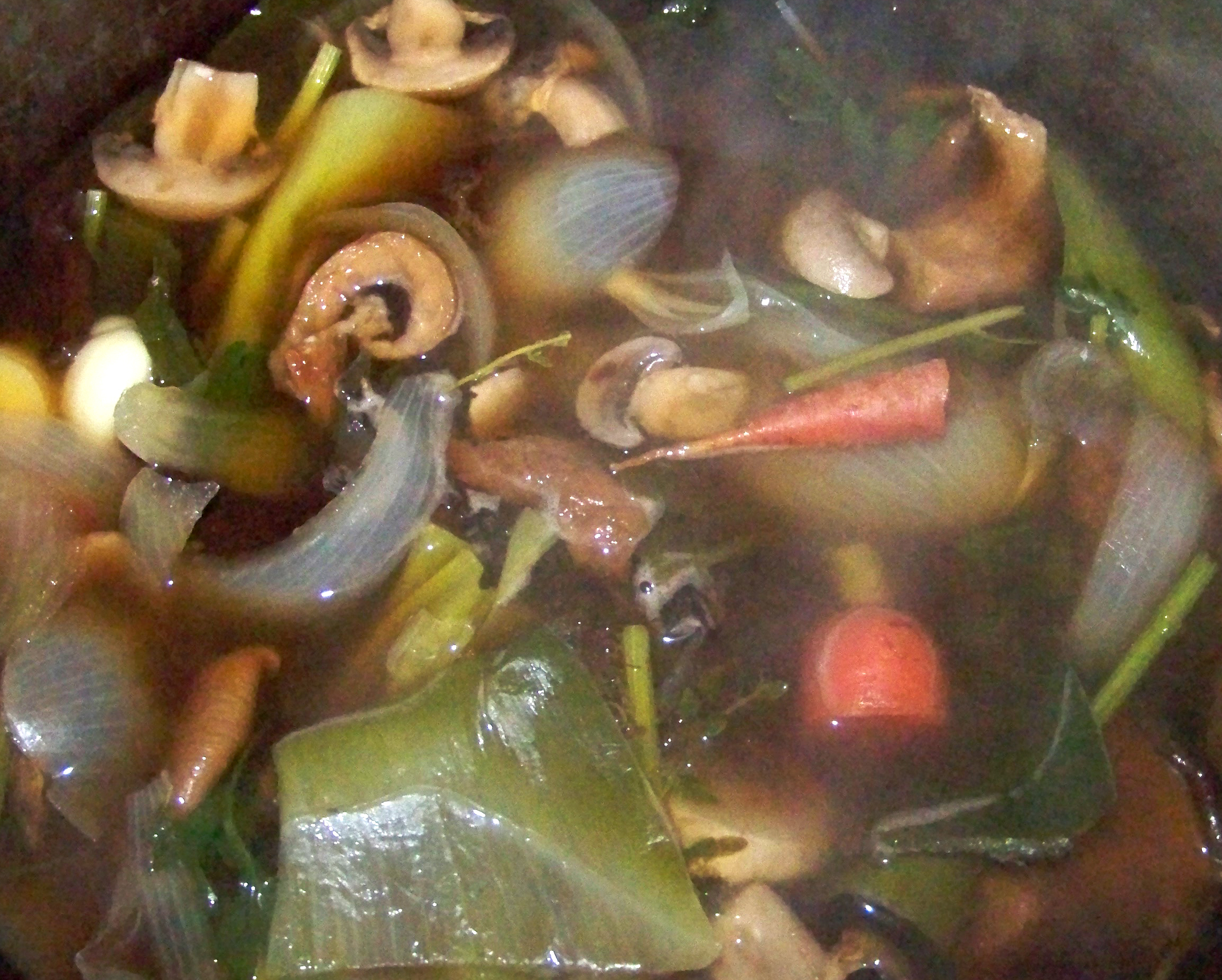
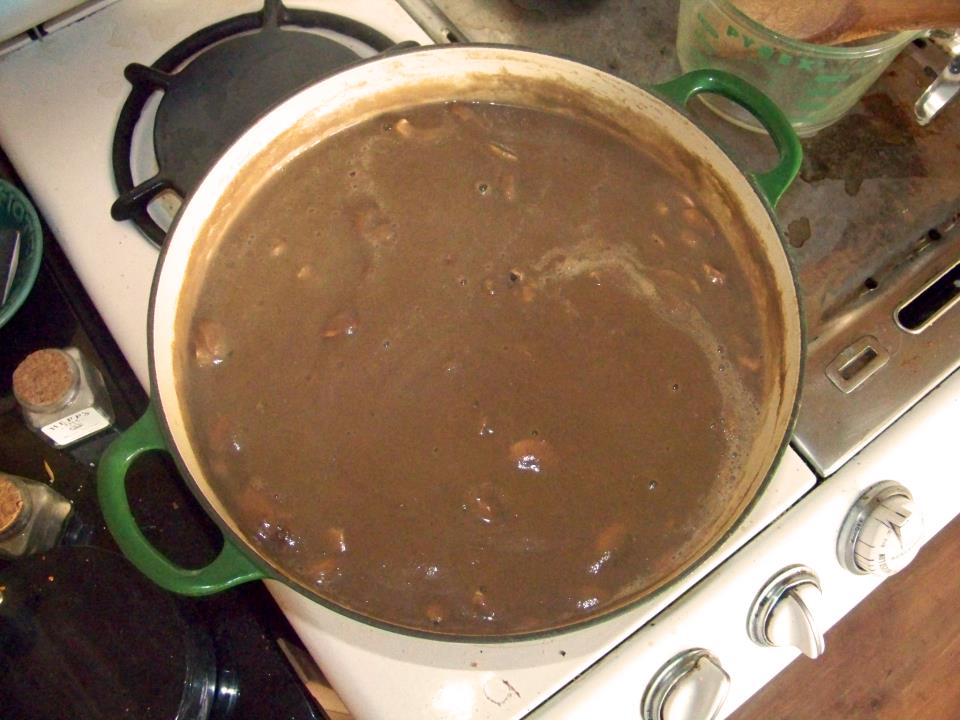
I made a mushroom stock from water and leeks and carrots and parsley and garlic and dried and fresh mushrooms (dried oyster and black trumpet mushrooms, fresh Eryngii, Maitake, and Bunapi mushrooms), then I sautéed a bunch of fresh mushrooms (I think there were seven different varieties of fresh mushrooms in the soup) and some spices, combined the whole lot (mushrooms, homemade mushroom stock, a bit of olive oil, a little fresh rosemary and oregano, and some salt and pepper) in the Vita-Mixer and puréed like a crazy man.

Sautéed and puréed fresh mushrooms

Sautéed and puréed fresh mushrooms

[Incidentally, there are consequences to puréeing hot soup in a food processor whose lid has been too securely clamped; the steam forces the liquid out of the container at high pressure in directions hitherto unimagined at a velocity just barely less energetic than an Olympic gymnast’s free-form floor event. Live and learn.]

543101_4367384215490_1311006759_n

The resulting soup — at least the part of it that I didn’t have to wipe off the cabinets, counters, and floor — was magnificent; creamy, hearty, aromatic. And I owe it all to the wonders of what might be the single most essential countertop kitchen device other than the toaster — the VitaMix[er].