You can call me Al. Albóndigas.

2
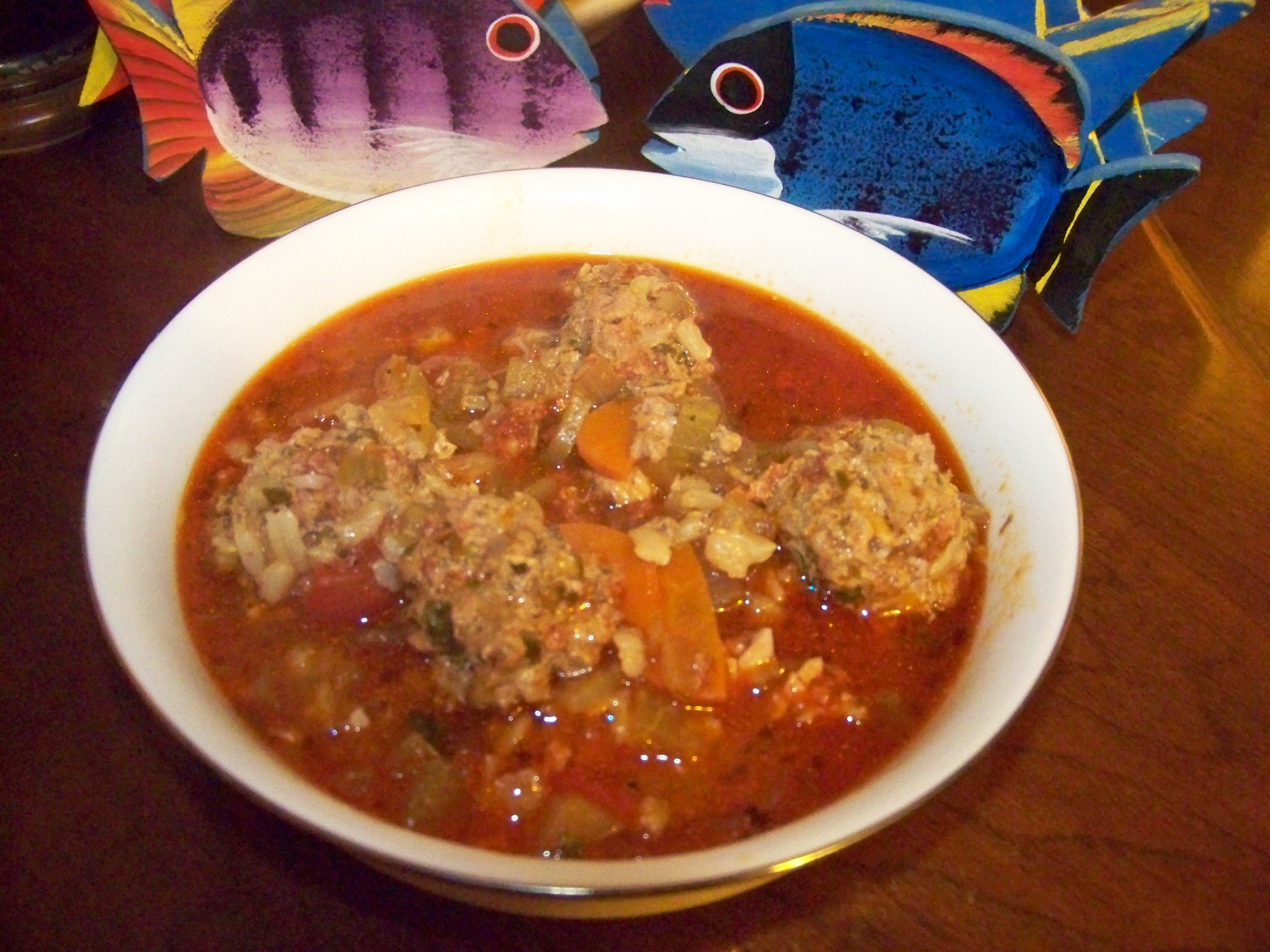
Believe it or not, the red colour comes mostly from the chorizo, not the tomatoes.

Believe it or not, the red colour comes mostly from the chorizo, not the tomatoes.

One inevitable responsibility after Thanksgiving dinner is the disposal of the turkey carcass. Picked clean for sandwiches and goodness knows what all else — tamales? sliders? pot pie? — there’s still a significant heap of bones and attached bits that deserve a better resting place than the rubbish bin.

Around our house, we generally made turkey and vegetable soup, but it just seemed too… turkey-ish. By the time we’d gotten down to the carcass, believe me, most of the members of our household were all done with turkey. This year, I decided to make some simple turkey stock (something on the order of four liters, as it turned out, because I wasn’t patient enough to let it condense into what Julia Child called a “semi-demi-glace”). But not for turkey soup. No. I figured it would make an excellent base for one of my favourite Mexican dishes, sopa de albóndigas (meatball soup).

While this soup is decidedly Mexican, its roots go back to the times that Arabs ruled Spain. The word “albóndigas” is derived from the Arabic word for hazelnut, “al-bunduq,” because the meatballs of the era were about the size and shape of said nuts. Their preparation was described in one of the great cookbooks of its day (its day being the 13th century), Kitab al- tabikh fi Maghrib wa al-Andalus (An Anonymous Andalusian Cookbook). Not too surprisingly, the meatballs emigrated to the New World with the conquistadores (along with smallpox and syphilis, albeit with a happier outcome for the locals). The use of mint in this recipe is almost certainly a descendant from a Middle Eastern predecessor, given the region’s historic proclivity for employing the herb as a seasoning for meats.

Far as I’ve been able to discover, there are two general schools of thought on sopa de albóndigas. One holds that it’s primarily a tomato-based soup, and the broth ought to be more or less jam-packed with tomato-y goodness and coloured fire engine red (PMS 199); the other is that tomatoes play a role, but not the lead. I opted for the latter. After all, I’d gone to some trouble to make the turkey stock, and I didn’t want it completely buried in the mix. The soup ultimately turned out a rich red colour, but that was thanks to the chorizo, not the tomatoes (as you can see in the picture below, when it was just the veggies and stock).

ALBÓNDIGAS SOUP

Carrots, planed on the mini-mandoline. I then cut the "coins" in half.

Carrots, planed on the mini-mandoline. I then cut the “coins” in half.


Ingredients
Broth
12 cups/3 liters turkey stock (or chicken, or vegetable, or beef)
2 carrots, sliced
1 large onion, chopped
4 stalks celery, diced
1 (14 ounce/411 g) can diced tomatoes (these were fire roasted)
1 (7 ounce/198 g) can diced green chiles, drained
1 cup/150 g cooked rice
2 teaspoons/2 g dried oregano
2 teaspoons/2 g ground cumin
1 clove garlic, minced
1 to 3 tablespoons/15-45 ml sauce from a can of Chipotle chiles in adobo sauce, to taste
1 seeded Chipotle chile in adobo sauce, optional
Sea salt and pepper to taste (smoked salt works well in this)

Here’s a trick for the rice; just cook 1 cup/180 g of dried rice (I used Brown Jasmine), put 2/3 of it in the soup and reserve 1/3 for the meatballs.

[A NOTE ABOUT CHILES: If you’re seeding Chipotle chiles in adobo sauce, wear gloves. Even the sauce is pretty hot, and if you touch your face… well, you won’t do it a second time. For the uninitiated, add the adobo sauce a tablespoon at a time, stir the broth, taste, and decide if you want to add more. If you dump it all in at once, good on you, you brave soul, but remember that this is a bell that can’t be unrung. Also, if you don’t have Chipotles in adobo sauce handy, you can get Chipotle pepper powder; use 1-3 teaspoons/1-3 g, tasting as you go.]

Broth and veggies. Mmmm.

Broth and veggies. Mmmm.

Making the broth is super easy; basically, you just dump it all into a big pot, bring it to a boil, and then back it off to a simmer. I let mine simmer for a couple of hours, because I started making it one evening after dinner. [In fact, I put the broth in the refrigerator overnight and finished the soup the following day.] If, however, you are doing a same-day soup, allow it to simmer for about an hour, so you can soften up the celery and onions and carrots, and give the flavours a chance to blend.

Meatballs (makes about 50 small meatballs)
1 lb/.5 kg lean ground beef
1 lb/.5 kg chorizo sausage, casing removed (not the fully cooked kind)
2 eggs, beaten
1/2 cup/70 g cooked rice
2 garlic cloves, minced
5-10 mint leaves, chopped
1/2 cup/25 g cilantro leaf, chopped
1/2 teaspoon/3 g salt
1/4 teaspoon/.5 g freshly ground black pepper

Full disclosure: I had about 100 g of turkey bits that I ran through a food processor and added to the meatballs. It’s not part of the “official” recipe, but it did taste good.

Mint and garlic get all muddled up.

Mint and garlic get all muddled up.

Some people say to make the meatballs first, but there’s really no need; getting the broth together and letting it simmer will afford you more than enough time to make them. The only trick to assembling the meatballs is that you should mash the garlic and the chopped mint into a sort of paste; otherwise, it’s just a matter of mixing it all up and rolling little meatballs (albóndigas) to about 1″/2.5 cm each. Heat up the broth to a low boil and lower the albóndigas — gently — into the broth. Let the meatballs cook at that temp for 5 minutes, then back the heat off, and simmer a further 20 minutes. Remember, at this point, your chief aim is to cook the meatballs through. That’s why smaller is better.

Tiny little soldiers of meat, preparing to parachute into -- quite literally -- the soup.

Tiny little soldiers of meat, preparing to parachute into — quite literally — the soup.

You can serve it straight, or if you want to get extra fancy, you can make corn tortilla ribbons for garnish. Just quarter small corn tortillas, stack the quarters, then slice the edges into ribbons. Heat 2 tablespoons of oil in a frying pan, dump the ribbons inthe pan and stir until slightly browned. Remove them to a paper towel to drain and crisp up. Sprinkle over soup.

With the fried corn tortilla strips; these were spinach corn tortillas, for colour primarily.
With the fried corn tortilla strips; these were spinach corn tortillas, for colour primarily.
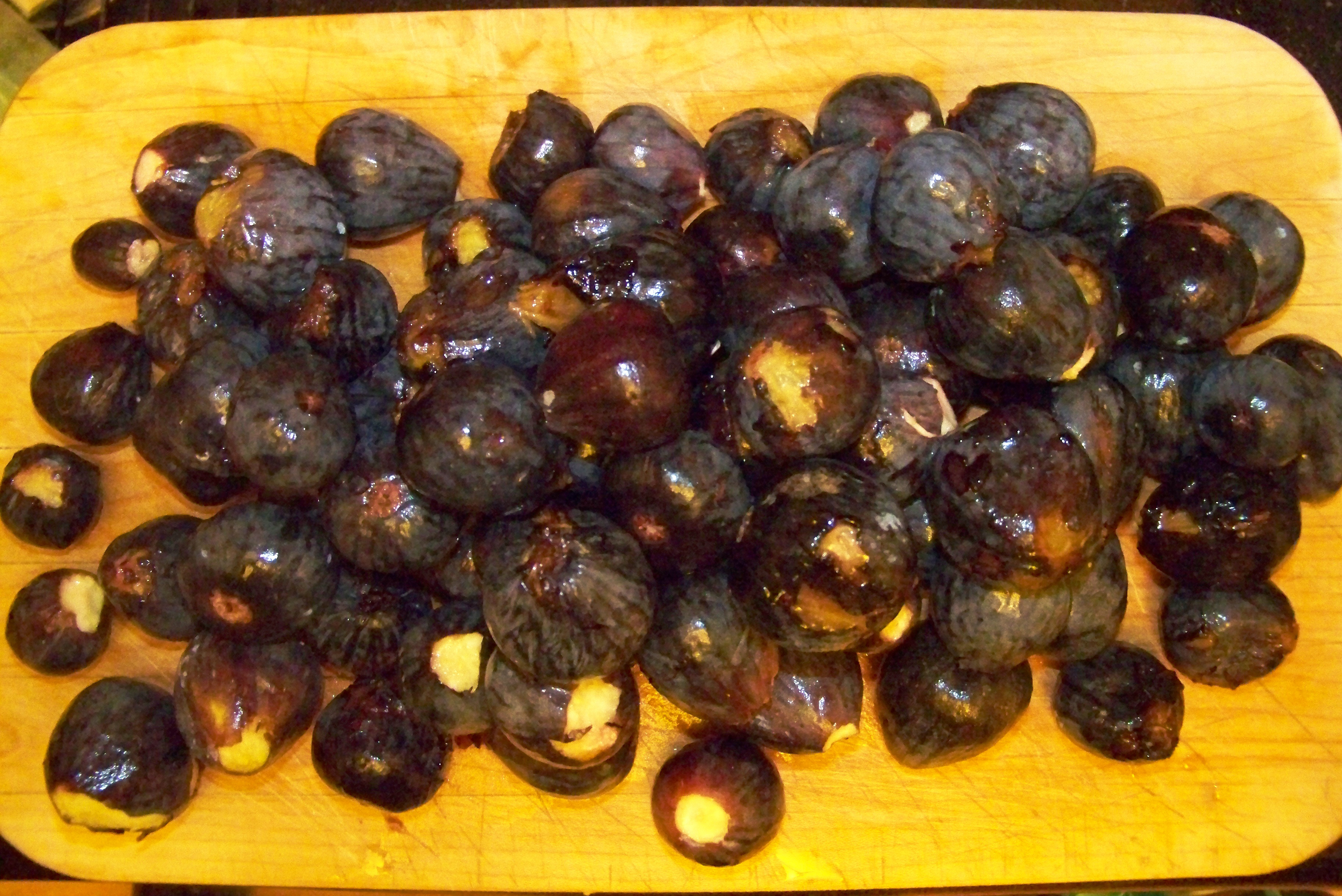
Fig Onion Rosemary, um… It’s a Jam! It’s a Conserve! It’s a Very Thick Sauce!

2
Destemed figs await being destiny.

It’s figgy! It’s oniony! It’s rosemary-y! It’s… Supercondiment!

When it comes to a project like this, seems to me there’s only two ways to go: 1) You can make just enough for yourself, and let’s face it, a little goes a fairly long way, or 2) If you’re going to bother with it at all, you may as well make a bunch, and share it with friends, neighbours, co-workers, etc. After all, you’re committing the same amount of time in either case, and in the latter mode, you can share the wealth. Sure, your cost of ingredients doubles, but by a back-of-the-napkin calculation, that came to about $12 in this case, less if you use red onion rather than Vidalia sweet onions, a cheaper wine, and can find a better deal on fresh figs than Whole Foods‘, all of which are well within pretty much everyone’s reach.

Clostridium botulinum, or Botox in the wild.  (Photo Credit: Dr. Gary Gaugler/Science Photo Library)

Clostridium botulinum, or Botox in the wild.
(Photo Credit: Dr. Gary Gaugler/Science Photo Library)

I’m going to say this up front, because food safety is paramount: THIS MUST BE REFRIGERATED. You can’t really preserve it in a standard water bath as you do other jams, because the pH isn’t low enough (or, put another way, the acidity isn’t high enough) to guarantee that our old pal Clostridium botulinum won’t rush in and ruin the day. The spore that causes botulism — and turns actresses of a certain age into Stepford Wife-looking creatures — is given a perfect home to reproduce in a fairly low-acid foodstuff that has been canned in an anaerobic (air-free) environment. You could get around this by adding a healthy dose of lemon or lime juice (or citric acid powder), but that would muck about with the flavour in a way that I wasn’t aiming for, personally. That said, if you do want to adjust the recipe and can it in the trad fashion, I’d recommend getting a pack of pH test strips and make sure you have the acidity at a pH lower than 4. Then the nasty little beastie is banished from the kingdom.

Now that I’ve frightened you, let me say that this is the same advice you’d get for canning meat, or asparagus, or mushrooms, or wax beans, or pretty much any veg that isn’t a tomato (and yes, I know a tomato is technically a fruit).

If, on the other hand, you have a pressure cooker/canner, you could do this no worries, so long as you get the canning temp above 240° F/115.6° C for a specific period (there are online guides), and it makes sense to err on the side of caution. Otherwise, you’re just going to have to treat it the same way you do pretty much everything else: put it in the fridge, and use it within 10 days or so. [Since it isn’t going to be in an anaerobic environment, botulism isn’t an issue, but as you well know, nothing in the fridge keeps forever… except that box of baking soda that doesn’t really absorb the odors the way it’s advertised to do.]

On to the good stuff.

This jam/conserve/very thick sauce is most excellent when served with stinky cheese, or as a glaze/condiment for a pork tenderloin, chops, or chicken. [Of course, since it’s vegan, it’s also good with crackers and flatbreads, not to mention garden burgers.] I tried to keep the sugar content as low as practicable, favouring the umami as much as possible.

Destemmed figs, awaiting their destiny.

Destemmed figs, awaiting their destiny.

FIG ONION ROSEMARY JAM/CONSERVE/VERY THICK SAUCE
INGREDIENTS:

45ml (3 tbsp.) extra virgin olive oil
3 large Vidalia sweet onions, sliced (about 1kg) (any onion can be substituted here)
5g + 1.25g (1 tsp. + 1/4 tsp.) sea salt or kosher salt
15g + 250g (1 tbsp. + 1 cup) turbinado sugar (white sugar works also)
1.25kg (2.75 lbs.) fresh Kadota figs (or whatever variety is convenient)
30ml (2 tbsp.) fig balsamic vinegar (or other balsamic vinegar or wine vinegar)
500ml (2 cups) red wine (2/3 of a standard bottle)*
15g (1 tbsp.) fresh rosemary, finely chopped

DIRECTIONS:

[Mise en place notes: Slice the onions and set then aside in a bowl; wash and destem the figs, then cut them in half (north/south) and set aside in a separate bowl. Chop the rosemary and set it aside. You can measure out your other moist and dry ingredients at this time if you want to, but nothing here is so time-sensitive that it’s really necessary.]

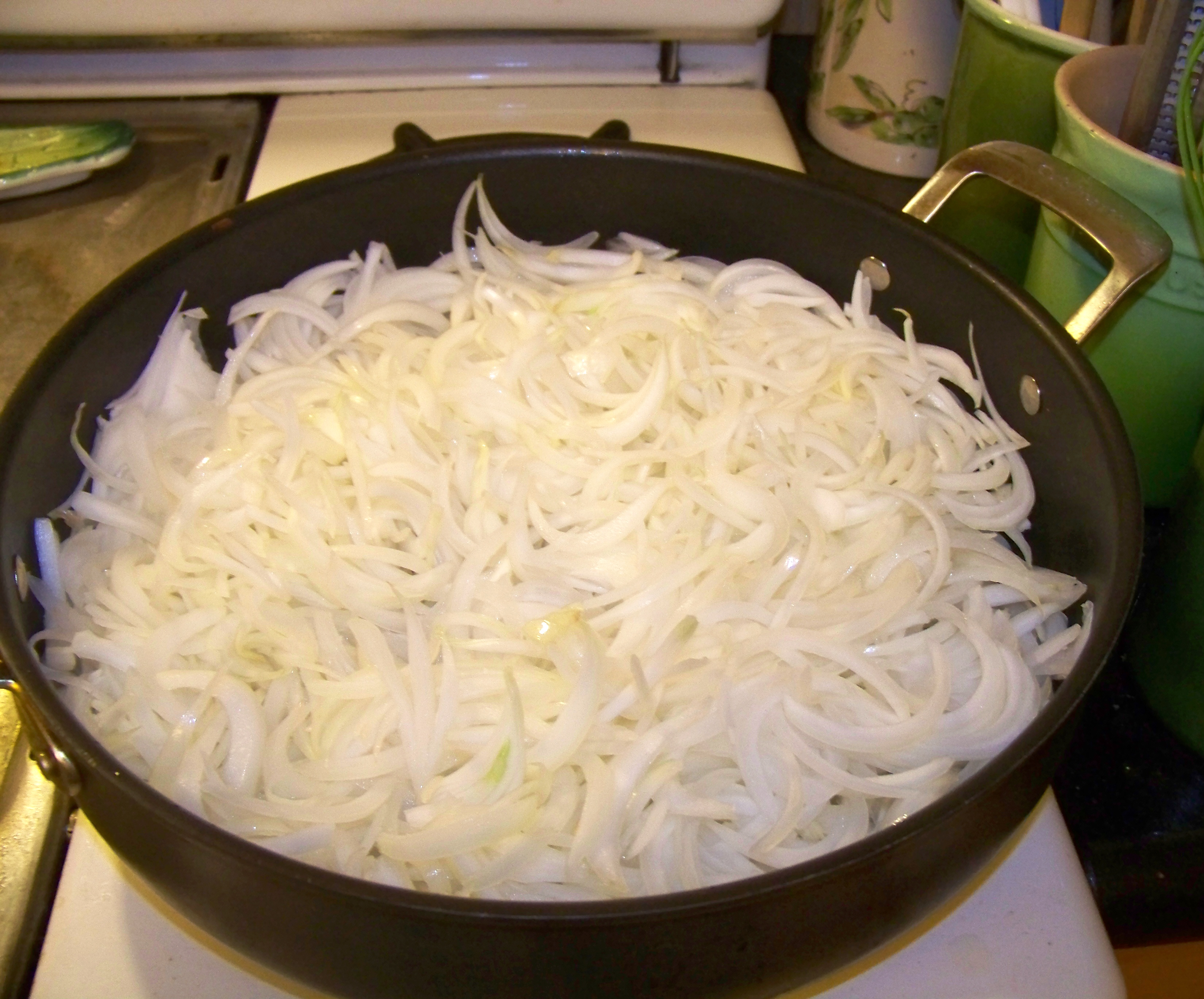
The only time the Sweet Vidalia onions made me cry was at the checkout counter.

The only time the Sweet Vidalia onions made me cry was at the checkout counter.

Heat pan on high and add the olive oil; when oil begins to shimmer, add the sliced onions, 5g/1 tsp. salt, 15g/1 tbsp. sugar, and stir briskly, to coat onions with the oil and mix in the salt and sugar. Reduce heat to medium high and allow onions to caramelize, about 20 to 30 minutes. [Note: If you haven’t done this before, it’s a little tricky. Stir them too often, and they don’t brown up. Stir them too infrequently, and they can burn. Don’t freak out if a couple of the onions look overdone; not a big deal. Timing is approximate depending on the amount of onions, your pan, and the heat of your cooktop.]

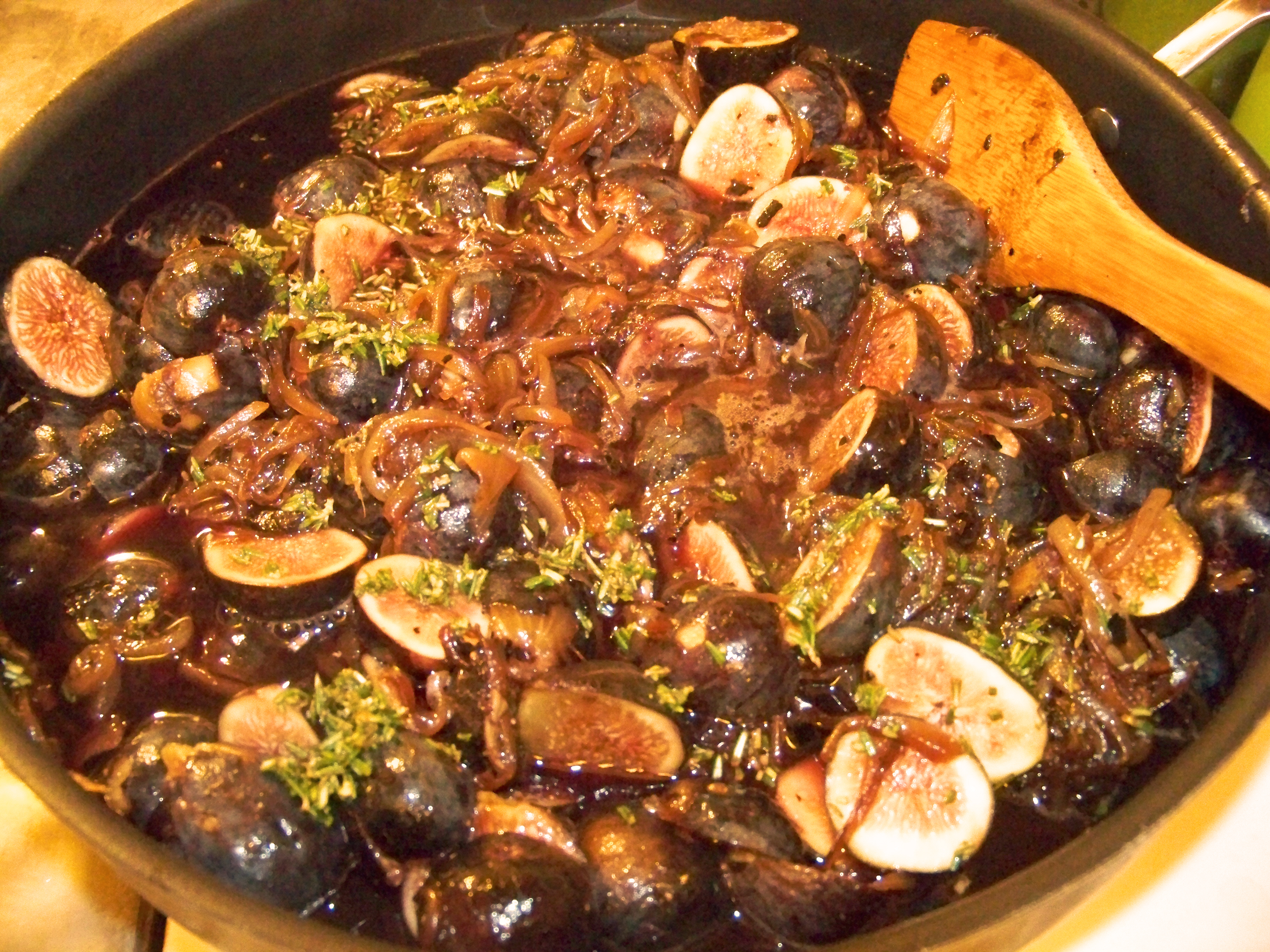
Onions, rosemary, and figs! Oh my!

Onions, rosemary, and figs! Oh my!

When the onions are browned, add the balsamic vinegar and wine to deglaze the pan, being sure to scrape any brown bits off of the bottom of the pan. Add figs and simmer until tender, about 20-30 minutes, stirring occasionally and pressing the figs against the side of the pan with a wooden spoon to break them up. Add the remaining turbinado sugar and salt (to taste) and simmer for an additional 20 minutes. If jam/conserve/very thick sauce gets too thick, add more liquid (either wine or water) as needed until the desired consistency is reached.

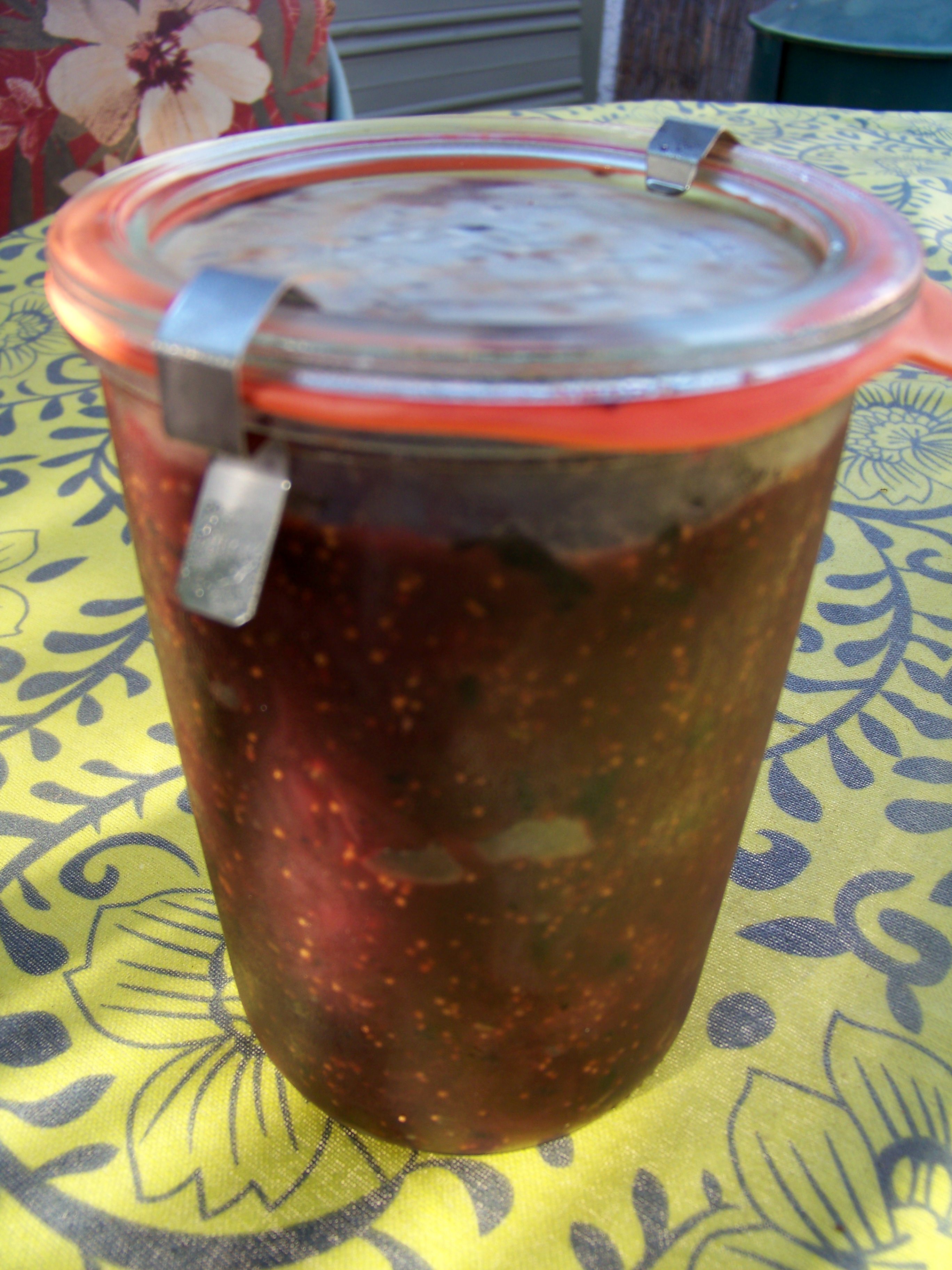
Jam, condiment, or very thick sauce? We report, you decide.

Jam, conserve, or very thick sauce? We report, you decide.

Allow to cool until it is safe to handle, then spoon into clean jars and refrigerate. Makes approximately 1.5 liters/just over 6 cups. Should be just fine for at least 7-10 days.

Fancier than it needs to be?

Fancier than it needs to be?

* A note on wine: I used Kendall-Jackson 2010 Vintner’s Reserve Summation Red, a blend of 28% Zinfandel, 27% Merlot, 14% Cabernet Sauvignon, 7% Petite Sirah, 3% Grenache, and 2% Petit Verdot. Why? I’d like to tell you that I did because it was the perfect match for the Brix (sweetness) level of the figs, but in fact it was around, I wasn’t particularly interested in drinking it at the time, and it wasn’t so expensive that I’d feel bad about having used it for making jam/conserve/very thick sauce. Any dry red will do; I may try a Pinot Noir or some other wine for the next batch, just to see how that works. You’ve probably heard this before, but you should avoid using any wine in cooking that you wouldn’t drink. So-called “cooking wines” are about as appetizing as Drāno®.

ADDENDUM:
I gave away a pint of the you-know-what to my pal Lisa Jane Persky, who is an actress, writer, artist, and a damn fine cook in her own right; here’s the chop she made with it. Nice.

Mmmmmm.

Mmmmmm.

ADDENDUM #2:
The other week, I attended a food festival at which restaurateur/radio host/generally cool individual Evan Kleiman was speaking about preserving tomatoes, and she said that (given the comparatively high pH of some newer varieties of tomato), she sometimes adds straight citric acid (which can be purchased either online or at many fine markets) to acidify the solution rather than adding lemon or some other citrus juice. The reason is that, while citric acid will make your jam/conserve/really thick sauce lower in pH (and hence, more sour-tasting), it won’t introduce any new flavour. You can buy pH strips or litmus paper to check to see if its pH is below 4. Alternatively, as noted above, you can pressure can the conserve/jam/really thick sauce. Or just stick it in the fridge. You’ll probably go through it faster than you thought.